English
 Español
 عربى
عربى हिंदी
हिंदी
Nylon 6 HOY Yarn: Properties, Specs & Applications
Content
Fabric developers sourcing flat nylon filament for lace, linings, or fine-knit structures often hit the same wall: FDY feels too stiff, POY still needs texturizing. Nylon 6 HOY Yarn was engineered to close exactly that gap — and understanding what it offers can save you a costly round of sampling.
What Is Nylon 6 High Oriented Yarn?
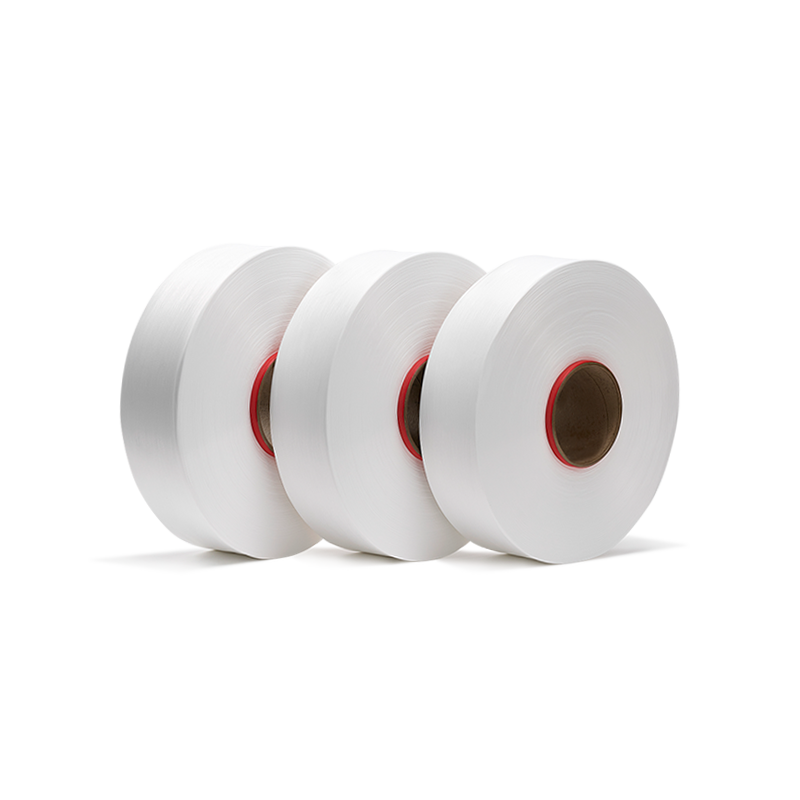
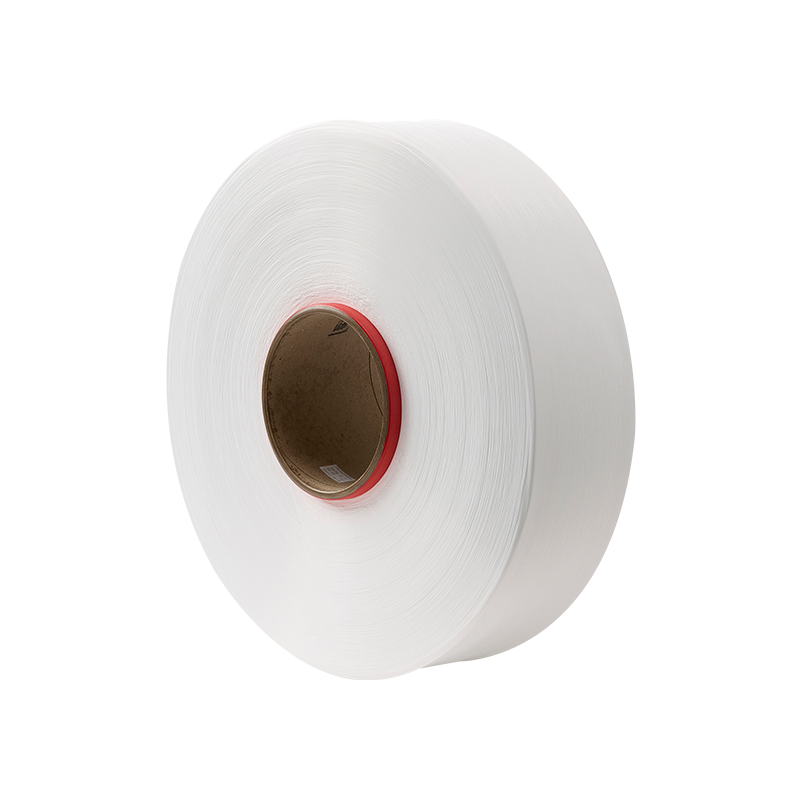
Nylon 6 High Oriented Yarn is produced via ultra-high-speed melt spinning — typically above 4,500 m/min — in a single-step spin-draw process. The high takeup speed creates stress-induced crystallization inside the filament, locking in a degree of molecular orientation that sits between standard POY and fully-drawn FDY. No separate drawing step is needed after winding, which shortens the production chain and keeps the yarn structure uniform.
The result is a filament that carries more elongation than FDY while retaining better dimensional stability than POY. That combination is exactly what fine-gauge lace machinery and high-thread-count lining fabrics demand.
Key Specifications at a Glance
The table below reflects the product scope available from Fangyuan's Nylon HOY Yarn line:
| Parameter | Range / Option |
|---|---|
| Fineness | 10D – 140D |
| Filament Count | 5F – 96F |
| Luster | Full Dull / Semi-Dull / Bright |
| Tenacity | ≥ 3.8 – 4.2 cN/dtex |
| Elongation at Break | 55% – 65% |
| Boiling Water Shrinkage | Lower than FDY |
The 10D–140D fineness window covers everything from ultra-fine lingerie grounds to structured lining fabrics. The 5F–96F filament count range allows precise control over hand feel: fewer filaments give a crisper hand; more filaments deliver a silkier drape.
Performance Characteristics That Matter on the Floor
Three properties define Nylon HOY's practical advantage over adjacent yarn types:
- High elongation, controlled strength. With 55–65% elongation at break, HOY absorbs machine tension without snapping — critical on high-speed warp knitting frames running at 1,200–2,000 rpm.
- Low boiling-water shrinkage. Shrinkage is kept significantly lower than FDY, which means garment dimensions stay stable through dyeing and finishing — fewer rejects, tighter tolerances.
- Superior fabric hand feel. The partial draw relaxation leaves the filament with a natural softness that FDY, with its tighter molecular lock, cannot match without post-processing additives.
Where Nylon 6 HOY Fits Best
Nylon HOY Yarn is the default choice for applications where soft touch and dimensional stability must coexist:
- Lace fabrics — the combination of brightness (bright luster option) and elongation allows intricate Raschel and Leavers lace patterns to form cleanly and hold their shape.
- Clothing linings — low shrinkage and smooth hand mean the lining moves with the outer shell, doesn't pucker after washing, and feels comfortable against skin.
- Warp knitting and circular knitting — fine denier HOY (10D–40D) runs smoothly on high-gauge machines without the tension spikes that cause FDY to snap or POY to stretch unevenly.
- Fancy yarn base — HOY's balanced elongation makes it a reliable core when it will be wrapped, twisted, or converted downstream into novelty constructions.
HOY vs. FDY vs. POY: Where Each One Belongs
A quick positioning comparison helps clarify the sourcing decision:
| Yarn Type | Orientation Level | Typical Elongation | Primary Use Case |
|---|---|---|---|
| Nylon POY | Partial | 100% – 150% | Feedstock for DTY / ATY texturizing |
| Nylon HOY | High | 55% – 65% | Direct weaving / knitting, lace, linings |
| Nylon FDY | Full | 25% – 40% | High-tenacity technical and apparel fabrics |
If your process requires texturizing downstream, Nylon POY is the right starting point. If you need maximum tenacity for technical applications, Nylon FDY is better suited. For everything in between — direct-to-fabric end uses that prioritize hand feel and stable dimensions — Nylon 6 HOY is the correct specification. For a detailed side-by-side analysis of HOY and POY, see our HOY vs. POY comparison guide.
Sourcing Checklist: What to Confirm Before Ordering
When requesting samples or placing a first order for Nylon 6 High Oriented Yarn, lock down these four parameters upfront to avoid costly re-specification:
- Denier and filament count — define both together; a 40D/24F and a 40D/48F will knit differently even at the same denier.
- Luster grade — full dull, semi-dull, and bright each produce a different fabric appearance under light; confirm against your target fabric before bulk order.
- Elongation tolerance — specify an acceptable elongation band (e.g., 58% ± 3%) so every cone runs consistently on your machines.
- Boiling-water shrinkage limit — particularly important if your dyeing process uses temperatures above 95°C; request a test report with the sample.
Getting these details right at the sampling stage cuts downstream quality issues significantly — and it's the kind of technical alignment that separates reliable suppliers from ones that just ship cones.