How Intermingle Points Influence Processing Efficiency of Nylon 6 Draw Textured Yarn
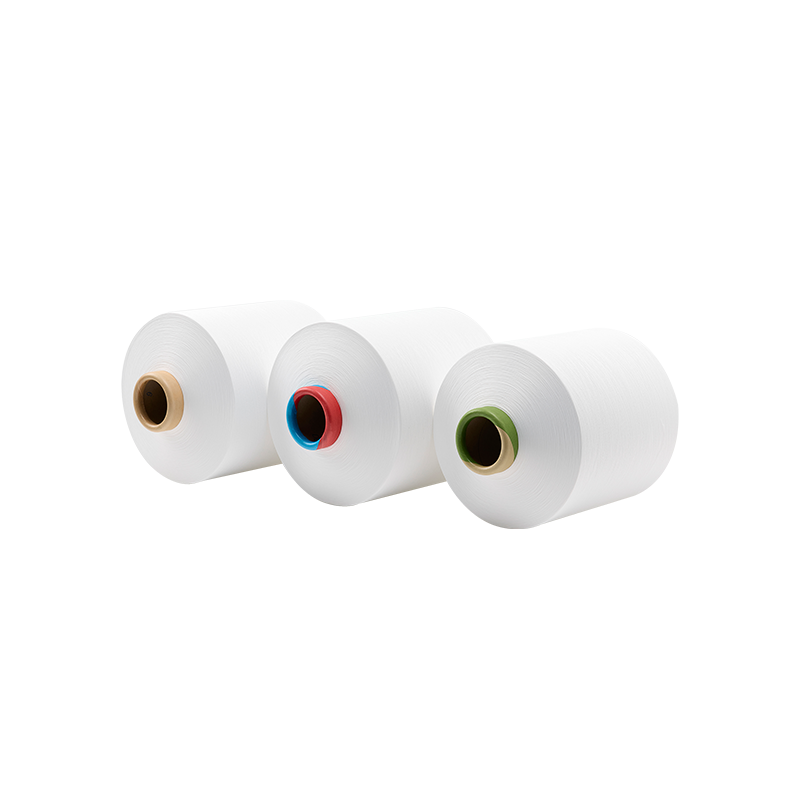
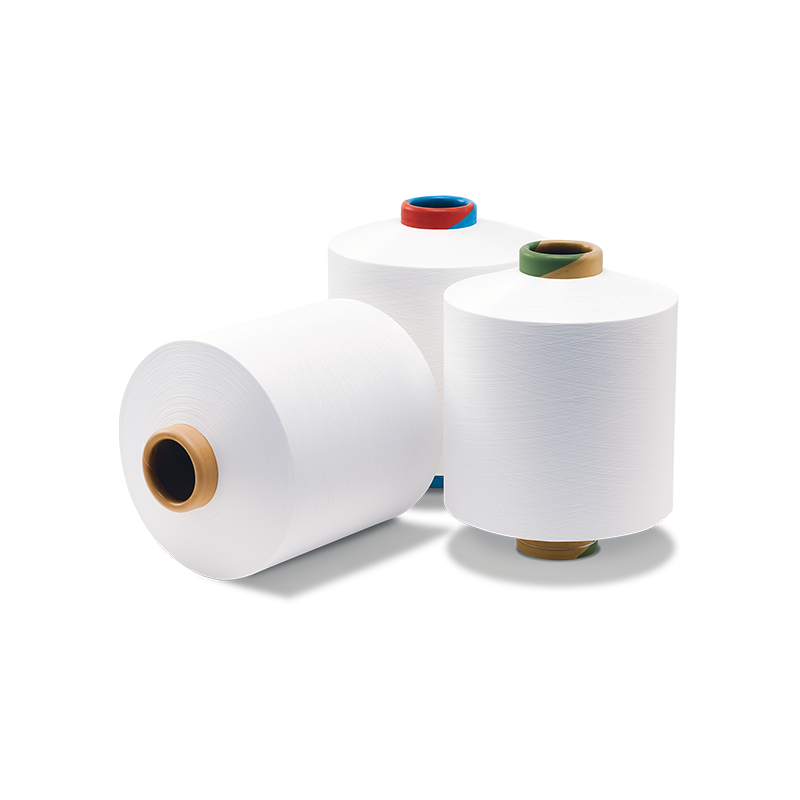
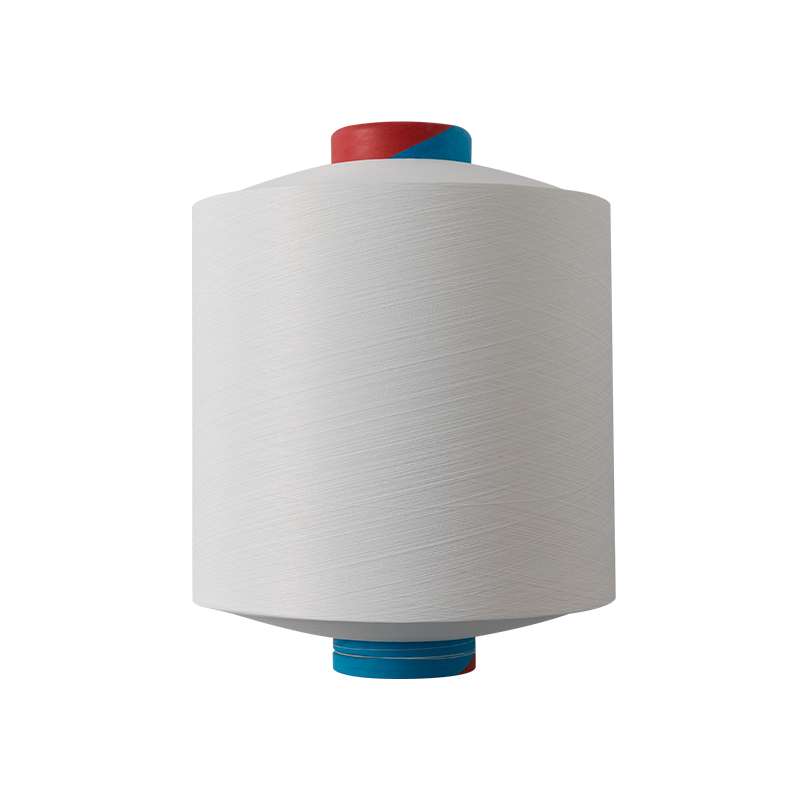
During texturing, individual filaments in a Nylon 6 Draw Textured Yarn are opened and intermingled using compressed air to create periodic entanglement points. The number of intermingle points per meter, often called interlace or tangle count, directly affects unwinding behavior and fabric quality. Insufficient intermingling can cause loose filaments to snag or generate excess lint on high-speed knitting machines, leading to needle breaks and fabric defects. Conversely, over-intermingling may produce a harsh hand and uneven dye penetration, because the tight nodes restrict yarn bulk.
For example, a 40-denier Nylon 6 DTY typically benefits from an interlace count of 90–120 nodes per meter when destined for circular knitting. Finer yarns such as 15D/5F may require a lower count, around 60–80 nodes, to preserve softness. Adjusting intermingle pressure and air jet geometry allows spinners to balance package build stability with downstream processability. At Zhejiang Fangyuan New Material Co., Ltd., we refine interlace settings for each lot based on your machine gauge and end use, helping you maintain smooth running and minimal stoppage. This practical know-how transforms Nylon 6 Draw Textured Yarn from a commodity into a tailored performance input.
Selecting the Right Luster: Full Dull, Semi-Dull, and Bright Nylon 6 DTY
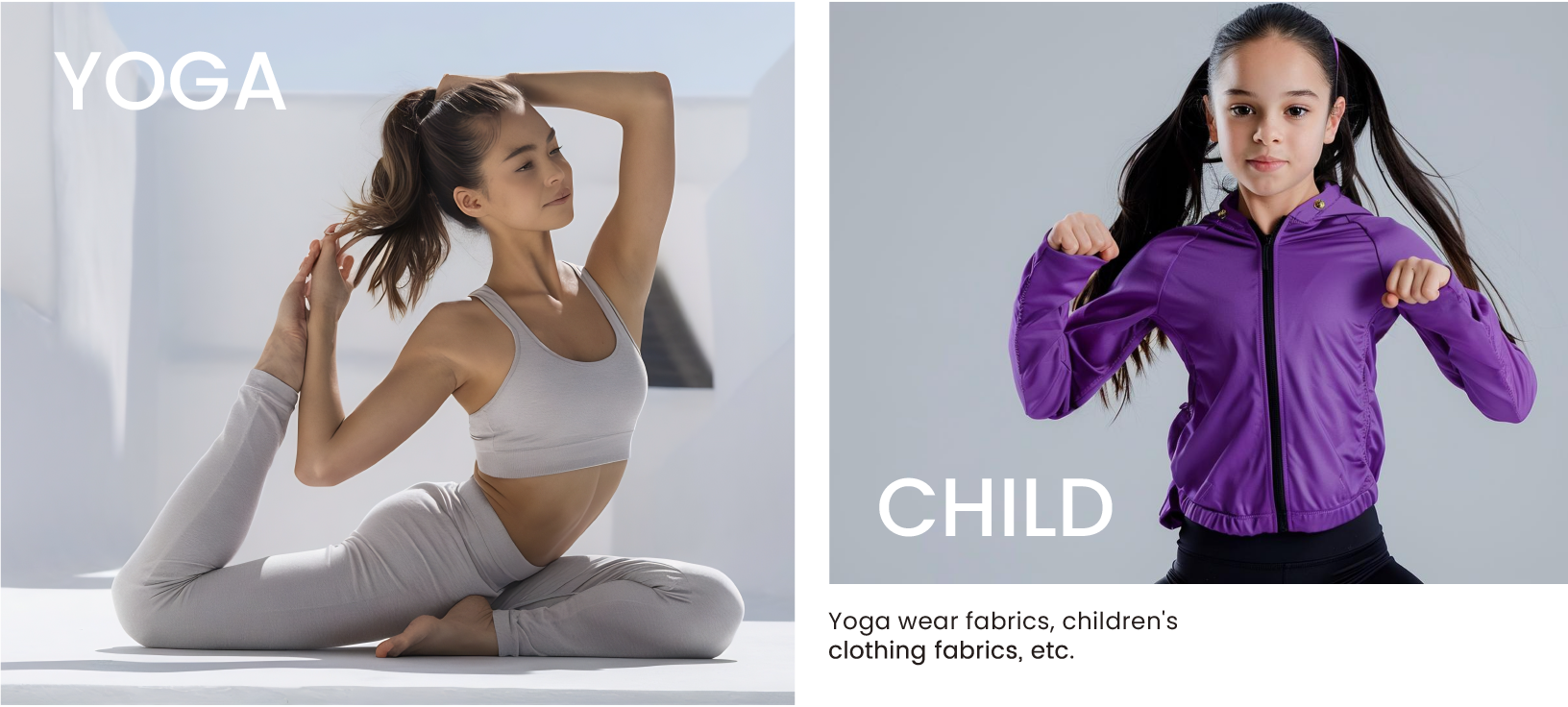
Titanium dioxide (TiO₂) content defines the luster category of Nylon 6 DTY and influences both aesthetics and dyeing behavior. Full dull yarns contain over 0.3% TiO₂, delivering a matte, cotton-like appearance preferred for high-end yoga wear that hides moisture marks. Semi-dull variants (TiO₂ ~0.1–0.3%) offer a subtle sheen and are often used in children's clothing where a soft glow is desirable. Bright yarns have negligible TiO₂, resulting in a lustrous, transparent look for lingerie or decorative trims.
Typical TiO₂ Levels and Uses for Nylon 6 DTY Yarn
| Luster Type |
TiO₂ Content |
Typical Fabric Application |
| Full Dull |
>0.3% |
Yoga wear, uniform fabrics |
| Semi-Dull |
0.1–0.3% |
Children’s wear, casual apparel |
| Bright |
~0% |
Lingerie, decorative narrow fabrics |
The presence of TiO₂ also affects dye uptake: full dull yarns can show dyeing inconsistencies if the masterbatch dispersion is not uniform. Our in-house polymerization at Fangyuan gives us rigorous control over additive distribution, so the Nylon 6 DTY Yarn you receive produces level dyeing across the entire fabric roll. By matching luster to your target fabric haptics and visual requirements, you avoid costly rework.
DPF and Filament Count: Engineering Fabric Hand with Nylon DTY Yarn
Denier per filament (DPF) is the single most influential parameter for fabric hand and mechanical properties. By dividing total yarn denier by the number of filaments, you arrive at DPF. A lower DPF – for instance 0.8–1.2 – creates a silky, supersoft touch ideal for next-to-skin garments, while a higher DPF of 2.0–3.0 imparts more body and crispness suited for outerwear or luggage fabrics.
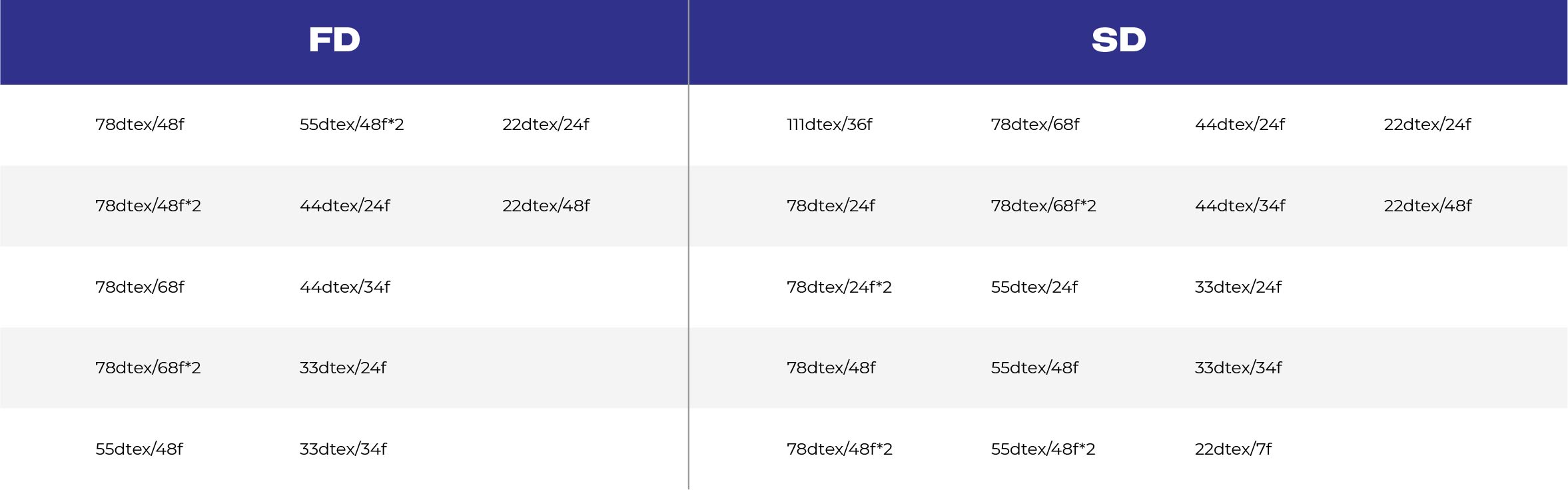
Our Nylon 6 DTY Yarn covers a wide fineness range from 8D to 140D with filament counts from 5F to 136F, which translates to DPF options between 0.5 and 3.0. Below are common pairings observed in activewear and children’s wear manufacturing:
- 20D/7F (DPF 2.86) – high elasticity and recovery, used in compression panels of yoga leggings.
- 40D/34F (DPF 1.18) – ultra-soft hand with excellent drape, preferred for premium yoga tops.
- 70D/68F (DPF 1.03) – cotton-like surface, ideal for children’s playwear and casual dresses.
- 140D/136F (DPF 1.03) – heavy yet supple, used in supportive bands and seamless garments.
Keep in mind that Nylon DTY with very low DPF can lose some crimp recovery due to fine filaments, so a balance must be struck. When selecting Nylon DTY Yarn for children’s clothing, a low DPF combined with a dull luster improves coverage and minimizes the risk of skin irritation from coarse fibers. As a Nylon 6 DTY Yarn manufacturer, Fangyuan helps you interpret DPF against your knitting gauge so the fabric feels right from the first sample.
Why Crimp Stability Matters in Nylon DTY for High-Stretch Fabrics
Nylon DTY derives its bulk and stretch from the mechanical crimp inserted during the false-twist texturing process. The degree of crimp, measured as crimp contraction (%), typically ranges from 20% to 45% depending on heater temperature, draw ratio, and D/Y ratio. For yoga wear and swimwear, crimp stability – the ability to retain crimp after repeated extension – is the true measure of long-term garment performance. A drop in crimp stability below 80% often leads to bagging at knees and elbows.
Measuring Crimp Contraction and Stability
The standard test (e.g., ASTM D4031) involves heat-setting a skein under load and measuring length change before and after exposure to boiling water or dry heat. A Nylon 6 Draw Textured Yarn with a crimp contraction of 35% and stability >85% will provide consistent stretch and recovery, even after dozens of wash cycles. Adjusting the primary heater temperature by just 5°C can alter crimp values noticeably, which is why precise thermal control from spinning onward is essential.
Impact on Yoga Wear and Children’s Clothing
In yoga leggings, the fabric is expected to stretch up to 60–80% in the course direction. Insufficient crimp stability of the Nylon DTY Yarn leads to permanent deformation and a baggy fit. Children’s apparel benefits from high crimp retention as well, since active play demands repeated stretch and recovery. By integrating polymerization, spinning, and texturing under one roof, Fangyuan keeps crimp behavior uniform from first meter to last. This means your Nylon DTY Yarn delivers the dependable elasticity your brand promises, without costly returns.

 English
 Español
 عربى
عربى हिंदी
हिंदी