English
 Español
 عربى
عربى हिंदी
हिंदी
Nylon HOY vs Nylon POY: Differences, Properties & How to Choose
Content
Textile buyers working with nylon filament yarn face a decision that comes up early in every sourcing conversation: HOY or POY? Both begin as Nylon 6 chips melted and extruded through spinnerets, yet they behave very differently on the loom — and the gap starts at the winding drum. Understanding how spinning speed determines molecular orientation, and how orientation determines end-use performance, is the foundation for making the right call on every order.
What Are Nylon HOY and Nylon POY?
Both yarn types belong to the flat filament family — smooth, continuous-filament yarns produced directly from melt spinning, without the post-spinning texturizing step that creates DTY's characteristic crimp. Beyond that shared starting point, they follow different manufacturing paths and deliver different properties to the fabric.
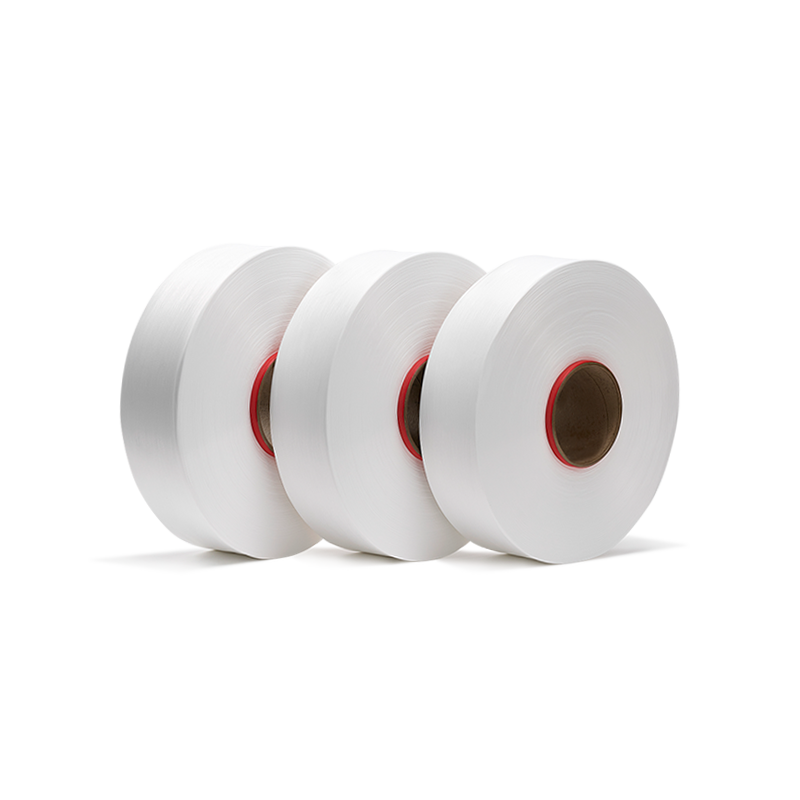
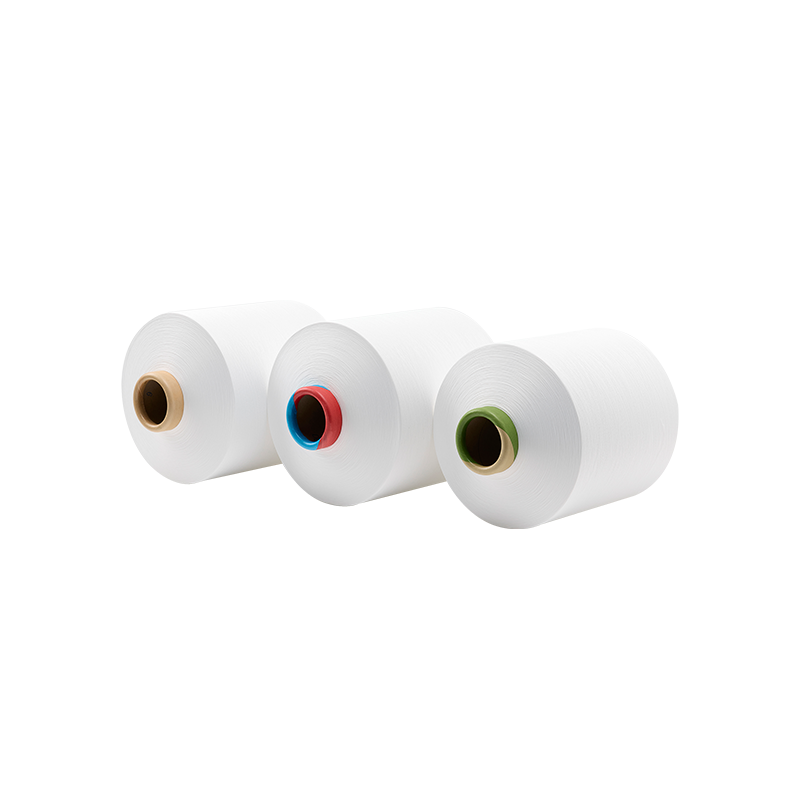
Nylon POY (Partially Oriented Yarn) is the industry's primary intermediate yarn. Spun at moderate winding speeds, the polymer chains in POY are only partially aligned along the fiber axis. This incomplete orientation leaves the yarn in a semi-stable state — strong enough to handle and package, but deliberately designed to be drawn or textured further in downstream processing. Most POY produced globally never reaches a loom directly; it ships to texturizing mills that convert it into DTY or FDY.
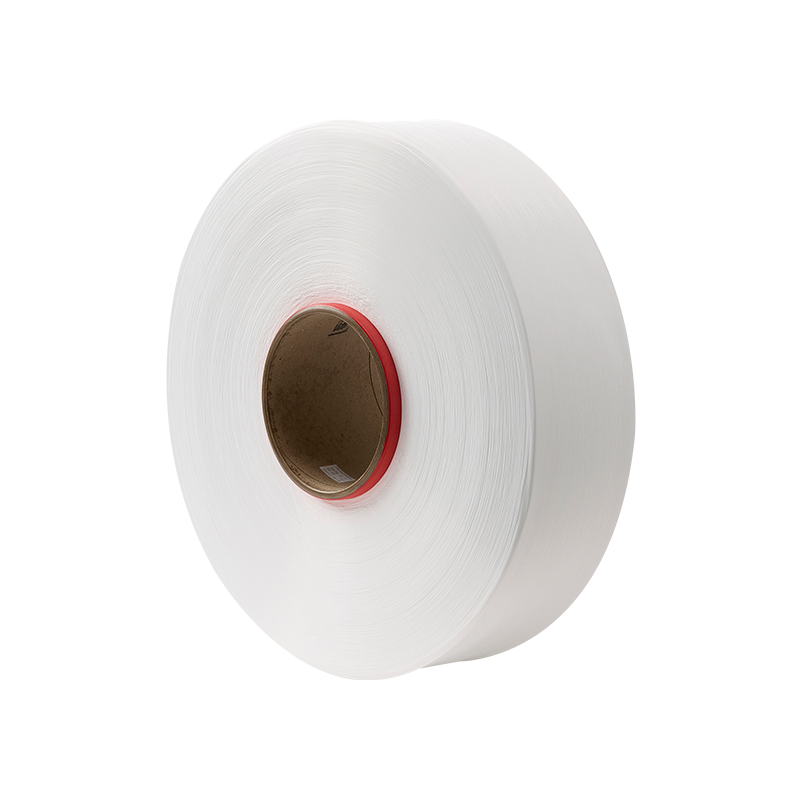
Nylon HOY (High Oriented Yarn) is spun at significantly higher winding speeds, which forces greater molecular alignment during spinning itself — without a separate drawing step. The result is a yarn that reaches a higher degree of orientation and crystallinity at the spinneret, giving it a distinct combination of high elongation, low shrinkage, and a notably soft, bright hand. HOY can go directly onto a knitting or weaving machine without further processing.
Fangyuan produces both yarn types from its own Nylon 6 polymer chips, covering a full range of nylon filament yarns including POY, HOY, DTY and ACY for downstream manufacturers across apparel, home textiles, and technical applications.
How They Are Made: The Spinning Speed Difference
The single most important variable separating HOY from POY is winding speed during melt spinning. As speed increases, the threadline tension rises, the polymer chains orient more strongly along the fiber axis, and the yarn's crystalline structure develops further — all before any drawing machine touches the filament.
For Nylon 6, typical winding speeds break down as follows:
| Yarn Type | Winding Speed | Orientation Level | Post-Spin Drawing Required |
|---|---|---|---|
| LOY (Low Oriented Yarn) | < 1,800 m/min | Very low | Yes — mandatory |
| POY (Partially Oriented Yarn) | 2,800 – 4,200 m/min | Partial | Yes — for DTY/FDY conversion |
| HOY (High Oriented Yarn) | 4,000 – 6,000 m/min | High | No — direct use possible |
| FDY (Fully Drawn Yarn) | > 6,000 m/min (with draw roll) | Full | No |
For Nylon 6 specifically, the POY speed window sits around 4,000–4,200 m/min at its upper end — closer to HOY territory than polyester POY — because nylon 6 crystallizes more rapidly and at lower stress levels. Manufacturers producing HOY on nylon 6 lines must carefully control quench air temperature, finish application, and winding tension to achieve stable, consistent packages at these elevated speeds. Equipment choice matters: Fangyuan's spinning lines use Japanese TMT winding equipment and German Barmag texturing machines, giving precise control over the critical parameters that determine which yarn type is produced.
Performance Comparison: Strength, Elongation, and Shrinkage
Spinning speed differences translate directly into measurable performance differences. The table below captures the key parameters buyers need when specifying nylon flat yarn for downstream applications.
| Property | Nylon POY | Nylon HOY |
|---|---|---|
| Tenacity | 2.5 – 3.5 cN/dtex | 3.8 – 4.2 cN/dtex |
| Elongation at Break | 80 – 120% | 55 – 65% |
| Boiling Water Shrinkage | 8 – 14% | 3 – 6% |
| Luster | Semi-dull / Bright | Bright / Full dull / Semi-dull |
| Hand Feel (direct use) | Not recommended for direct use | Soft, smooth, skin-friendly |
| Draw/Texture Processability | Excellent — designed for it | Limited — not intended for redrawing |
Several trade-offs are worth highlighting. POY's high elongation (80–120%) is a feature, not a flaw: it provides the deformation reserve that draw-texturizing machines need to impart crimp and bulk into DTY. Trying to texturize HOY on a DTY machine would yield inconsistent results because there is insufficient elongation reserve for the false-twist process. Conversely, HOY's lower boiling water shrinkage (3–6%) makes it dimensionally stable when knitted or woven directly — critical for lace and fine lining fabrics where post-process shrinkage causes quality rejections. Its higher tenacity relative to POY also means the knitted or woven fabric holds its structure under tension during finishing.
Applications: Where Each Yarn Excels
The processing pathway each yarn is designed for maps cleanly onto end-use application clusters.
Nylon POY: The Intermediate Powerhouse
POY's primary role is as feedstock for downstream converting. The vast majority of Nylon POY produced globally feeds into DTY production lines, where it is false-twist textured to produce the crimped, bulky yarn used in hosiery, sports socks, knitwear, and activewear. A secondary stream goes into FDY production via high-speed one-step draw-spinning, and some POY is draw-warped for woven applications. Because POY is not used directly in fabric formation, buyers are primarily textile mills and yarn converters — not fabric manufacturers.
Fangyuan's Nylon Partially Oriented Yarn is available in semi-dull and bright lusters, suitable for DTY conversion and other downstream texturizing processes. Customers sourcing POY as DTY feedstock can also reference Fangyuan's Nylon Draw Textured Yarn made from POY feedstock as a finished alternative if in-house texturizing capacity is a constraint.
Nylon HOY: Direct-to-Fabric Premium Performance
HOY's high orientation, low shrinkage, and soft hand make it the preferred choice for fabric constructions where the flat filament goes directly onto the needle or loom. The dominant application is lace fabric — warp-knit Raschel lace where the yarn's brightness and dimensional stability are critical to pattern definition and finished fabric hand. Clothing linings are a major secondary application: the low shrinkage means a lining cut and sewn into a garment behaves predictably through repeated laundering. Fine underwear, fashion fabrics, and narrow tapes also represent significant HOY end uses.
Fangyuan's Nylon High Oriented Yarn covers fineness specifications from 10D to 140D with filament counts from 5F to 96F, available in full dull, semi-dull, and bright lusters. This range supports both fine-denier lace applications and the heavier constructions used in lining and fashion fabrics.
How to Choose Between Nylon POY and HOY
The decision framework is straightforward once the downstream process is defined. Start with the question: will this yarn be converted before it reaches a fabric machine, or will it go directly onto one?
- If the yarn will be draw-textured into DTY → specify Nylon POY. HOY cannot substitute here; the elongation reserve is insufficient for stable false-twist processing.
- If the yarn will be knitted or woven directly into fabric → specify Nylon HOY. POY would require further processing and carries unacceptable shrinkage levels for direct-use fabric production.
- If the end product is lace, lingerie, or fine lining → HOY is typically the correct specification, with luster selected (bright for lace, semi-dull for lining) based on the handle and appearance target.
- If in-house texturizing capacity exists → POY sourcing gives greater flexibility; the converter controls the DTY specification (denier, twist level, luster) and can adapt to customer requirements without carrying finished yarn inventory.
- If budget and lead time are constraints → HOY's ability to go directly to fabric eliminates a processing step, which can reduce total cost-in-use even if the yarn price per kilogram is slightly higher than POY.
Denier selection follows the same application logic. Fine-denier HOY (10D–40D) dominates lace and hosiery-adjacent applications. Mid-range deniers (40D–100D) cover most lining and fashion fabric requirements. Coarser specifications above 100D are used in narrow tapes, straps, and functional apparel constructions. For POY, the denier range should match the DTY specification the converter intends to produce — accounting for the draw ratio applied during texturizing.
Sourcing Nylon HOY and POY from a Reliable Manufacturer
Supply reliability matters as much as specification in nylon flat yarn sourcing. Both HOY and POY are sensitive to process variation: inconsistencies in spinning speed, quench conditions, or finish application propagate directly into fabric defects — streaks in lace, uneven dye uptake in knitted fabric, or tension breaks during texturizing. The raw material chain matters too: manufacturers who polymerize their own Nylon 6 chips control the molecular weight distribution and relative viscosity of the melt, which are primary determinants of yarn consistency.
Zhejiang Fangyuan New Material Co., Ltd. operates a vertically integrated production model — from Nylon 6 chip polymerization through flat yarn spinning — across a 135,000 m² production base in Tongxiang, Zhejiang. The spinning lines run Japanese TMT winding equipment, and quality control uses Uster testers for yarn evenness and standard boiling water shrinkage and tenacity testing on every production lot. ISO 9001, ISO 14001, ISO 45001, and GRS (Global Recycled Standard) certifications cover the full production system.
For buyers sourcing Nylon HOY or POY at scale, proximity to major logistics hubs is a practical factor. Fangyuan's location in the Hangzhou-Jiaxing-Huzhou industrial belt, adjacent to Shanghai and Ningbo ports, supports reliable container loading schedules and short transit times to major textile manufacturing clusters in Southeast Asia, South Asia, and Europe.
Whether the requirement is fine-denier HOY for Raschel lace production or POY for an in-house DTY line, contact Fangyuan's technical sales team to discuss specification, packaging format, and lead time for your application.