English
 Español
 عربى
عربى हिंदी
हिंदी
Nylon 6 Chips (PA6): Properties, Grades, Applications & Supplier Guide
Content
- 1 What Are Nylon 6 Chips and How Are They Made
- 2 Key Properties That Make Nylon 6 Chips a Material of Choice
- 3 Grades of Nylon 6 Chips: Matching Material to Application
- 4 Where Nylon 6 Chips Are Used: Industry Applications
- 5 The Growing Market for Nylon 6: Trends and Opportunities
- 6 How to Choose a Reliable Nylon 6 Chips Supplier
Every year, millions of tons of Nylon 6 Chips flow through global supply chains — melted, spun, molded, and formed into products that people touch every day without knowing it. The fabric in a pair of tights, the intake manifold under a car hood, the film sealing a pharmaceutical blister pack — all of it starts with a small, uniform pellet of PA6 polymer. Understanding this material from the ground up is the first step toward making smarter sourcing decisions.
What Are Nylon 6 Chips and How Are They Made
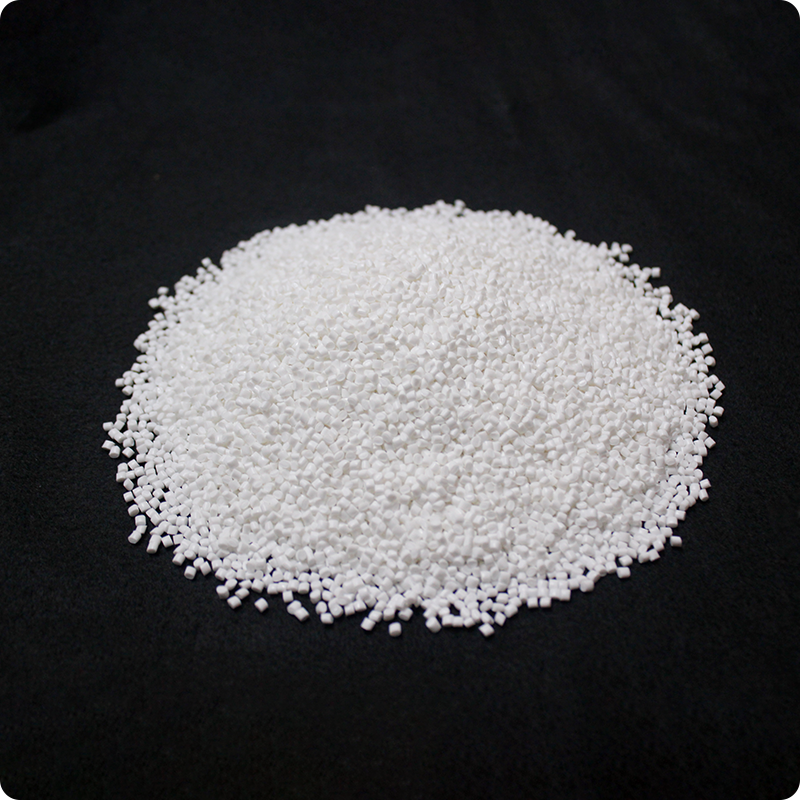
Nylon 6 Chips — also known as PA6 chips or polyamide 6 chips — are the solid polymer intermediate that bridges upstream petrochemical feedstocks and downstream fiber or plastic manufacturing. Physically, they appear as small, translucent or milky-white cylindrical pellets, free of mechanical impurities and uniform in size to ensure consistent melt behavior during processing.
The production process begins with caprolactam, a cyclic amide derived from cyclohexanone. Under controlled temperature and pressure, caprolactam undergoes ring-opening polymerization — a chain reaction in which the lactam ring opens and individual monomer units link sequentially to form long polyamide chains. This process, carried out continuously in industrial VK (Vereinfacht Kontinuierlich) tube reactors, yields a high-molecular-weight polymer melt that is then extruded, cooled in a water bath, and pelletized into chips.
After pelletization, the chips go through an extraction step to remove residual caprolactam monomer, followed by drying to bring moisture content down to specification. The result is a stable, packageable raw material ready for downstream conversion. The entire chain — from caprolactam to finished chip — demands tight process control; deviations in polymerization temperature, residence time, or extraction efficiency directly affect the relative viscosity (RV) of the final product, which in turn determines the mechanical performance of the yarns or parts made from it.
Key Properties That Make Nylon 6 Chips a Material of Choice
PA6 earns its place across dozens of industries because of a rare combination of properties that few polymers can match at equivalent cost.
- High tensile strength and elasticity. Nylon 6 fibers and molded parts maintain structural integrity under significant mechanical load while recovering their shape after deformation — a characteristic critical in both textile and engineering applications.
- Outstanding abrasion resistance. Surfaces made from PA6 resist wear significantly better than most commodity plastics, which is why it is the default choice for gears, bearings, and industrial components subject to friction.
- Thermal stability. With a melting point around 220°C, Nylon 6 retains mechanical properties across a wide service temperature range, though it performs best below continuous-use temperatures of 100–120°C depending on grade and reinforcement.
- Chemical and oil resistance. PA6 stands up well to hydrocarbons, oils, and many solvents, making it suitable for automotive under-hood environments and industrial fluid-contact applications.
- Dyeability and surface quality. For textile applications, the polymer's receptivity to acid dyes enables vibrant, uniform coloration — a property that nylon 66 and many other synthetics struggle to match at the same processing cost.
The trade-off is moisture absorption: PA6 is hygroscopic, absorbing up to 9–10% moisture at saturation, which affects dimensional stability and must be managed during storage and processing. Proper drying before melt processing is non-negotiable.
Grades of Nylon 6 Chips: Matching Material to Application
Not all Nylon 6 Chips are interchangeable. Manufacturers produce chips to specific grades defined by their relative viscosity, additive package, and intended end-use. Selecting the wrong grade leads to processing problems, performance shortfalls, or outright product failure.
Fiber Grade chips are formulated for spinning into continuous filament or staple fiber. They carry a precisely controlled RV — typically in the range of 2.4 to 2.8 for standard textile applications — and contain TiO₂ at varying concentrations to produce bright, semi-dull, or full-dull fiber aesthetics. Nylon 6 Chips for fiber-grade POY spinning must deliver consistent melt flow and low gel content to prevent spinneret clogging and yarn breaks during high-speed spinning operations.
Engineering Plastic Grade chips target injection molding and extrusion of structural components. These grades often carry higher molecular weights and may be compounded with glass fiber reinforcement, heat stabilizers, or flame retardants to meet demanding mechanical and thermal specifications required by automotive and electrical manufacturers.
Film Grade chips are designed for biaxially oriented or cast film production used in food packaging, pharmaceutical blister films, and flexible laminates. They require excellent transparency, low haze, and controlled barrier properties — demanding strict control over molecular weight distribution and additive levels.
Where Nylon 6 Chips Are Used: Industry Applications
The downstream reach of Nylon 6 Chips is broader than most raw materials. Four industries account for the majority of global consumption.
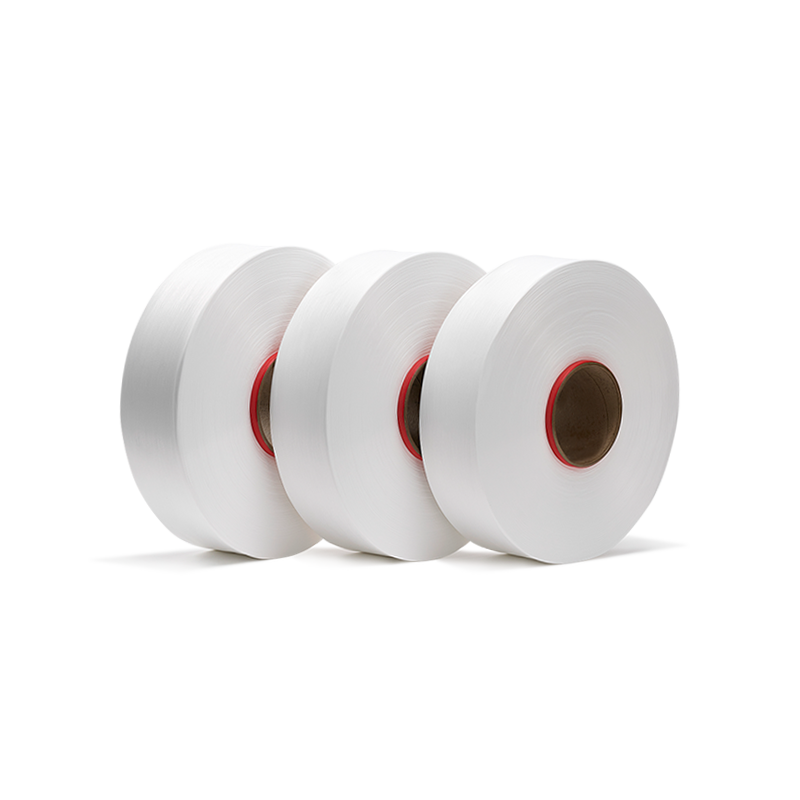
Textiles and Apparel. Fiber-grade chips are the starting point for hosiery, activewear, swimwear, lingerie, and upholstery fabrics. The polymer's combination of strength, elasticity, and dyeability makes it the preferred base for performance and intimate apparel. Downstream processors take Nylon 6 Chips processed into draw textured yarn to produce the stretch fabrics that dominate sportswear and athleisure markets globally.
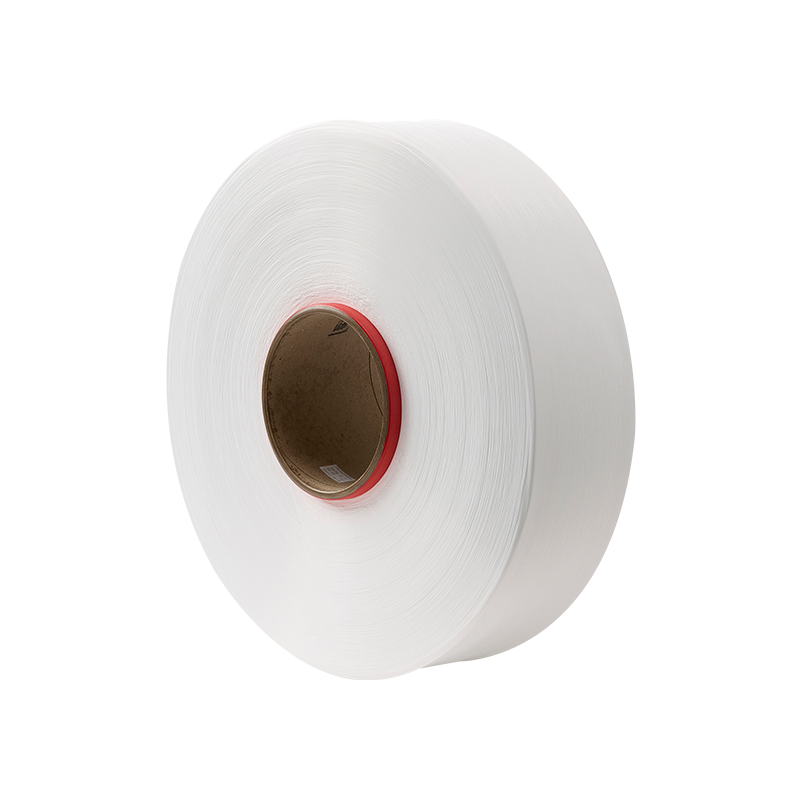
Technical Textiles and Industrial Fibers. Beyond apparel, PA6 chips are spun into tire cord, conveyor belt fabric, safety nets, fishing nets, ropes, and parachute fabric — applications where tensile strength and fatigue resistance are primary selection criteria. For elastic technical applications, Nylon 6 Chips converted into air covered yarn deliver the elasticity and surface comfort required by compression garments and medical textiles.
Automotive Components. Engineering plastic grade PA6 goes into intake manifolds, engine covers, fuel system components, door handles, and structural brackets. The automotive sector's shift toward lightweighting has accelerated substitution of metal parts with glass-fiber-reinforced nylon, reducing vehicle weight and improving fuel efficiency without compromising load-bearing performance.
Packaging. Film grade chips are processed into barrier films that protect food, pharmaceuticals, and electronics. Nylon 6 film provides excellent oxygen and aroma barrier properties in multilayer packaging structures, extending shelf life without requiring excessive film thickness.
The Growing Market for Nylon 6: Trends and Opportunities
Demand for Nylon 6 Chips continues on an upward trajectory, driven by structural growth in both its traditional and emerging end markets. The global nylon 6 market stood at approximately USD 17.4 billion in 2025 and is projected to reach nearly USD 29.8 billion by 2035, reflecting a compound annual growth rate of around 5.5%. Asia Pacific leads consumption, accounting for roughly 39% of global volume, with China remaining the single largest producer and consumer of PA6 chips worldwide.
Two macro-trends are reshaping the competitive landscape. First, the automotive industry's aggressive electrification targets are creating sustained demand for lightweight, thermally stable polymers. Electric vehicles require more plastic components per unit than combustion-engine vehicles — particularly in battery housings, thermal management systems, and structural brackets — and PA6 is well positioned to capture a disproportionate share of that growth.
Second, sustainability pressures are pushing manufacturers toward recycled and bio-based nylon. Mechanical recycling of post-industrial PA6 waste is already commercially established, and chemical depolymerization back to caprolactam monomer is advancing toward commercial scale. Suppliers who can offer chips produced under certified recycled content standards — such as the Global Recycled Standard (GRS) — are gaining preference among brands with published sustainability commitments.
How to Choose a Reliable Nylon 6 Chips Supplier
Procurement of Nylon 6 Chips is not purely a price exercise. Inconsistent chip quality propagates through every downstream process: a shift in RV translates directly into yarn tenacity variation; moisture content above spec causes hydrolysis degradation during spinning; gel content above threshold clogs spinnerets and drives up waste rates. The cost of a quality failure in the spinning hall is orders of magnitude higher than any nominal saving on chip price.
Evaluate potential suppliers against four criteria. Production scale and process control: suppliers operating fully automated continuous polymerization lines with real-time RV monitoring are better positioned to deliver batch-to-batch consistency than those relying on batch processes and offline QC. Certifications: ISO 9001 for quality management is a baseline; ISO 14001 and ISO 45001 signal environmental and safety management maturity; GRS certification is increasingly required by downstream brands. Vertical integration: chip manufacturers who also operate downstream spinning facilities have an inherent incentive to maintain chip quality — their own production depends on it. Supply reliability: annual capacity, warehouse buffer stock, and logistics network proximity all affect lead times and the ability to respond to demand fluctuations without forcing the buyer to carry excessive inventory.
Fangyuan has manufactured Nylon 6 Chips since 2010, operating five fully automated chip production lines alongside integrated spinning capacity for POY, HOY, DTY, FDY, and ACY. The facility holds ISO 9001, ISO 14001, ISO 45001, and GRS certifications, and is located in Tongxiang, Zhejiang — at the logistical center of China's Yangtze River Delta textile cluster, providing efficient access to major ports and downstream manufacturing hubs. Explore Nylon 6 Chips and downstream products across the full range, or learn more about Nylon 6 Chips manufacturer overview and production infrastructure.