English
 Español
 عربى
عربى हिंदी
हिंदी
What Is Nylon Made Of? Raw Materials, Chemistry, and How It Becomes Fiber
Content
Pick up a pair of leggings, a swimsuit, a windbreaker, or even a toothbrush, and you are almost certainly holding nylon. The direct answer to what nylon is made of: it is a synthetic polyamide, a plastic built by linking repeating chemical units called monomers into extremely long chains, and those monomers are overwhelmingly derived from petroleum. For nylon 6, the type behind most apparel and knitwear, the essential raw material is caprolactam, a ring-shaped compound refined from benzene taken out of crude oil. For nylon 6,6, it is a pair of chemicals, adipic acid and hexamethylenediamine. These feedstocks are polymerized into solid pellets known as chips, then melted again and spun into filament yarn or molded into parts. Knowing what happens at each stage explains why two lots of nylon that look identical on a pallet can behave very differently on a production line.
The Raw Materials: What Chemically Defines Nylon
Nylon is not one single substance but a family of polyamides, a name that comes from the amide group linking each repeating unit: a carbonyl carbon bonded directly to a nitrogen atom. That single linkage drives most of what buyers value in the material, because neighboring polymer chains form dense hydrogen bonds with each other, which produces nylon's tensile strength, abrasion resistance, and elastic recovery. The numbers in each nylon's name describe the carbon count of its building blocks. Nylon 6 is made from one six-carbon monomer, caprolactam. Nylon 6,6 is made from two monomers of six carbons each, adipic acid and hexamethylenediamine. Longer-chain types such as nylon 11 and nylon 12 follow the same naming logic and serve more specialized applications.
Nylon 6 and nylon 6,6 account for the overwhelming majority of commercial output. Nylon 6 is especially widespread in filament yarn for apparel, hosiery, socks, and knitwear, while nylon 6,6 holds a strong position in airbags, tire cord, and industrial fabrics, where its higher melting point of around 260 degrees Celsius pays off. Nylon 6 melts near 220 degrees Celsius, which makes it slightly easier and cheaper to spin.
| Nylon Type | Building Blocks | Polymerization Route | Typical Uses |
|---|---|---|---|
| Nylon 6 (PA6) | Caprolactam, a single six-carbon ring compound | Ring-opening polymerization | Apparel, hosiery, knitwear, film, engineering plastics |
| Nylon 6,6 (PA66) | Adipic acid plus hexamethylenediamine | Condensation polymerization via nylon salt | Airbags, tire cord, industrial fabrics, fasteners |
| Nylon 11 (PA11) | 11-aminoundecanoic acid, derived from castor oil | Condensation polymerization | Bio-based tubing, 3D printing powders, coatings |
| Nylon 12 (PA12) | Laurolactam, a twelve-carbon ring compound | Ring-opening polymerization | Fuel lines, flexible tubing, precision parts |
From Crude Oil to Caprolactam: Where the Feedstocks Come From
Caprolactam does not come out of the ground ready to use. Refineries crack crude oil into naphtha, and petrochemical plants convert that naphtha into benzene, one of the foundational building blocks of the chemical industry. From there, the standard route to caprolactam runs as follows:
- Benzene is hydrogenated into cyclohexane.
- Cyclohexane is oxidized into a mixture of cyclohexanone and cyclohexanol.
- Cyclohexanone is reacted with hydroxylamine to form cyclohexanone oxime.
- The oxime is rearranged into caprolactam and purified to polymerization-grade purity.
Adipic acid for nylon 6,6 comes from the same cyclohexane oxidation chemistry, so both of the major nylons share one petroleum ancestry. Feedstock purity matters more than most buyers expect: trace impurities that survive into polymerization reappear downstream as color drift, filament breaks, and unstable melt viscosity, which is why serious chip producers audit their caprolactam sources and verify incoming lots rather than buying on price alone.
Polymerization: How Caprolactam Becomes Nylon 6 Chips
For nylon 6, polymerization is a ring-opening reaction. Caprolactam is charged into a reactor together with a small, carefully metered amount of water, which opens a fraction of the rings and starts chain growth, and the batch is held at around 250 to 270 degrees Celsius under nitrogen. The opened molecules link into long chains of repeating amide units, the molten polymer is extruded into strands, cooled, and cut into small cylindrical pellets that the industry calls chips. Residual monomer is then washed out and the chips are dried before storage and shipment.
Two specification details at this stage decide how the material performs later. Molecular weight, usually expressed as relative viscosity, determines whether chips suit filament spinning, film extrusion, or injection molding, and producers control it by adding small amounts of a chain regulator such as acetic acid. Luster is adjusted with titanium dioxide: bright chips contain little or none, semi-dull chips roughly 0.3 percent, and full dull chips close to 2 percent. Both characteristics carry straight through to finished yarn and fabric, so a wrong choice at the chip stage shows up on every meter of cloth that follows. Chips are also graded by end use, and the differences between fiber grade, film grade, and engineering grade nylon 6 chips are large enough to justify separate evaluation before committing to a supplier.
Nylon 6 was first commercialized in the late 1930s, and the core chemistry has not changed since. What has changed is process control: automated viscosity monitoring, closed-loop monomer extraction, and precise luster dosing now separate consistent chips from inconsistent ones.
Nylon 6 chips in full dull, semi-dull, and bright grades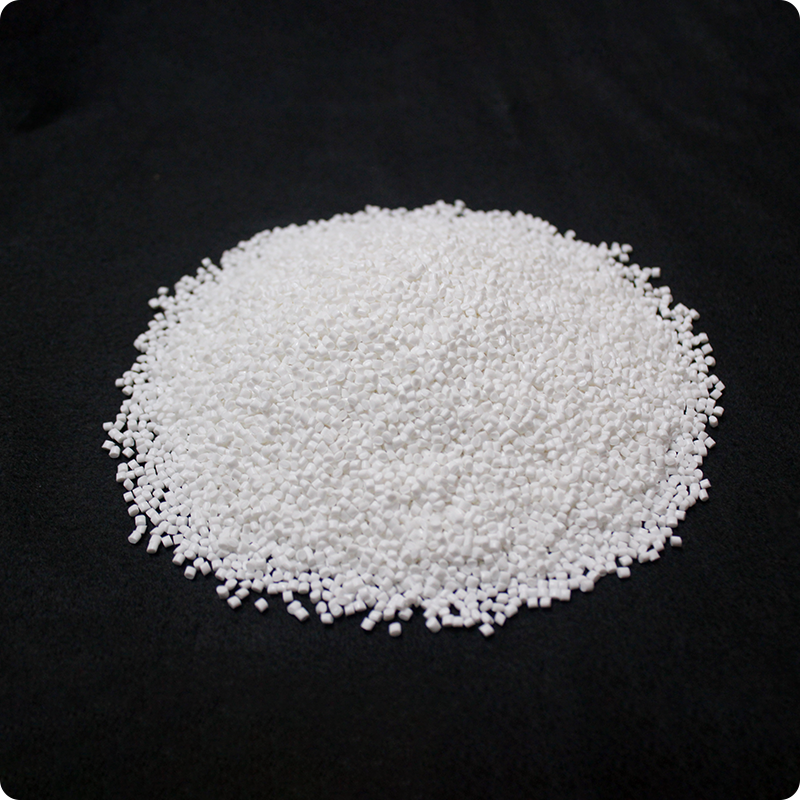 Fiber and Film Grade Nylon 6 Polymer ChipsNylon 6 chips are the melt-spinning feedstock for POY, HOY, FDY, DTY, and ACY yarns. Consistent viscosity and luster control from polymerization onward keeps downstream spinning stable, which is why integrated production matters here.View Product →
Melt Spinning: From Chips to POY, FDY, DTY, and ACY Yarn
Turning chips into yarn is a second melt cycle. Chips are dried to a very low moisture level, melted at roughly 260 degrees Celsius, and metered through a spinneret, a metal plate pierced with dozens to hundreds of fine holes. Each hole produces one continuous filament, and a controlled blast of cool air quenches the bundle as it descends the spinning chimney.
Freshly spun filament is weak and stretchy until it is drawn, a step that pulls the polymer chains into alignment and multiplies tenacity. The degree and speed of drawing is what creates the commercial yarn types.
How Drawing Level Creates Each Yarn Type
POY, partially oriented yarn, is drawn only partway and is designed for downstream texturing. HOY, highly oriented yarn, is produced at very high winding speeds and suits fine, soft knits. FDY, fully drawn yarn, is drawn in a single pass and feeds directly into weaving or knitting. DTY, draw textured yarn, adds a false-twist step that gives the filament crimp, bulk, and stretch, which is why it dominates socks, leggings, and knit outerwear. ACY, air covered yarn, wraps nylon around spandex using compressed air jets to build the stretch yarns used in seamless garments. Since these choices change fabric hand, elongation, and dye behavior, it is worth reviewing how nylon DTY compares with nylon FDY before locking in a specification.
Denier, the weight measurement for filament yarn, spans a wide working range in practice: fine yarns of 8 to 20 denier go into sheer hosiery, mid-range yarns build most apparel knits, and industrial yarns exceed 200 denier. What keeps dye lots matching and looms running is not the range itself but a supplier's ability to hold denier, luster, and viscosity stable from batch to batch.
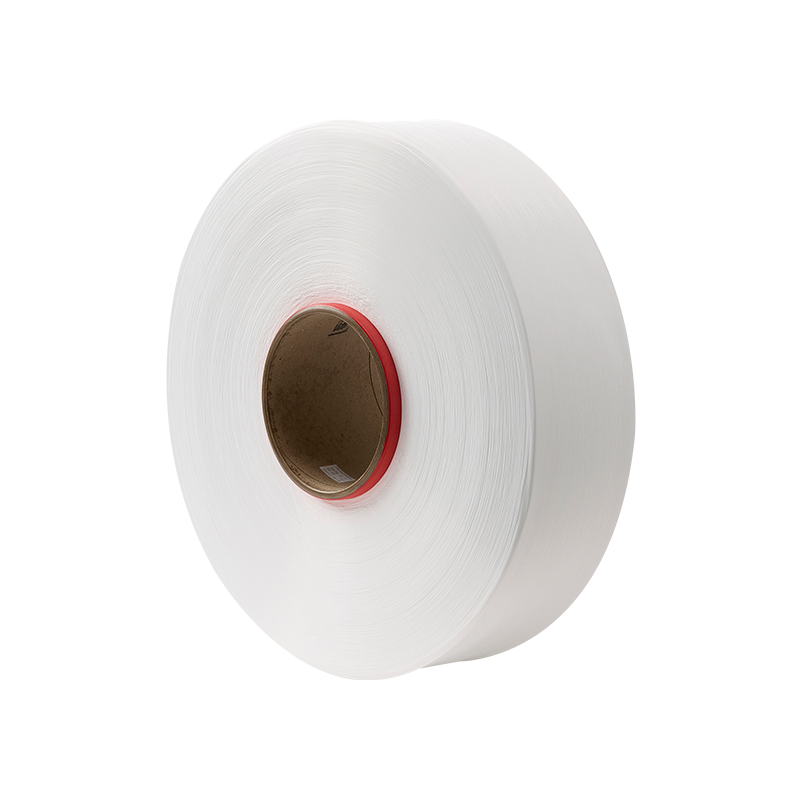
Nylon 6 POY covering 8D to 280D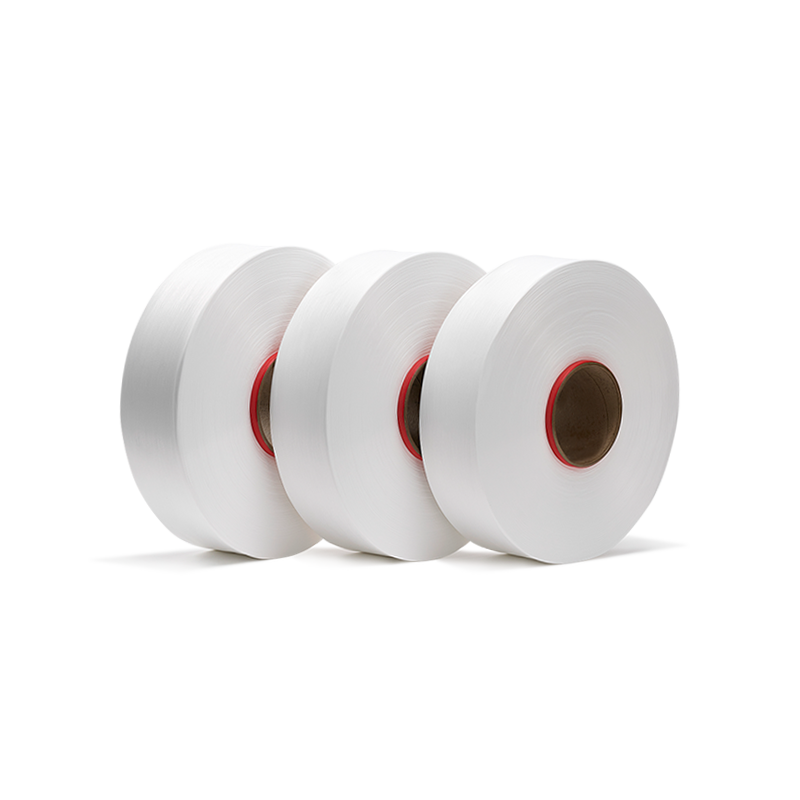 Nylon 6 Partially Oriented Yarn (POY)This semi-processed filament yarn, available in 19D-184D with 5F-136F counts and dull, semi-dull, or bright lusters, serves primarily as feedstock for draw texturing, linking the chip stage to finished stretch fabrics.View Product → Nylon 6 DTY for stretch, bulk, and knitwear
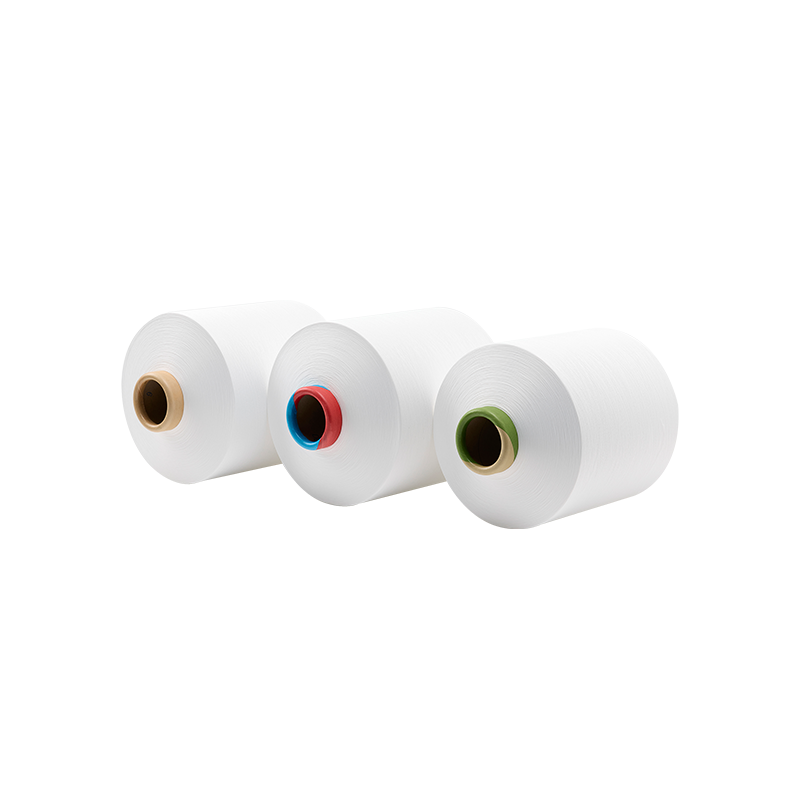
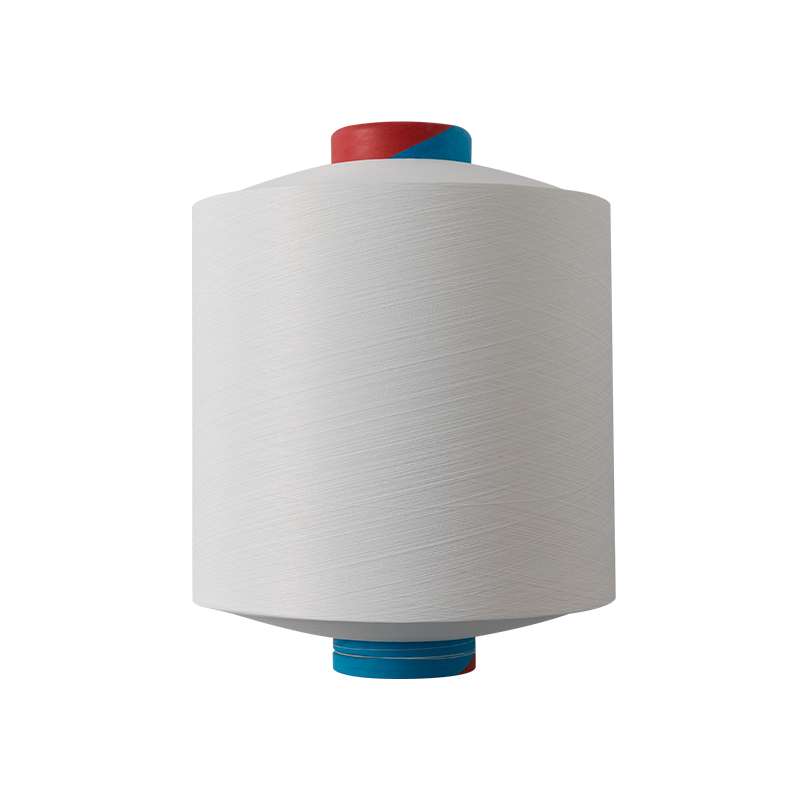 Nylon 6 Draw Textured Yarn (DTY)Draw texturing gives this yarn, offered in 8D-140D with 5F-136F filaments, its elasticity, making it suited to yoga wear and children's clothing fabrics where stable denier and luster across lots keep dyeing and weaving consistent.View Product →
What Nylon Composition Means for Buyers
Because nylon's properties are set at the molecular level, sourcing decisions should trace back to chemistry instead of price alone. Useful questions include whether a supplier controls both polymerization and spinning, whether relative viscosity and luster are confirmed for each lot, and whether the monomer feedstock comes from audited sources. Integrated producers such as Zhejiang Fangyuan New Materials, which manufactures nylon 6 chips and spins them in-house into POY, HOY, FDY, DTY, and ACY, can close that loop, matching chip specifications to yarn requirements without the material ever leaving the plant.
Two trends are also changing what nylon is made of. Bio-based routes such as nylon 11 from castor oil, and chemical recycling that depolymerizes nylon 6 waste back into caprolactam, are widening the raw material menu beyond crude oil. Energy inputs are part of the picture as well, and some producers in China now run large on-site solar installations to power their polymerization and spinning lines. The chemistry at the heart of nylon has stayed stable for nearly ninety years, but the sourcing, control, and footprint behind it keep moving, and buyers who track those details consistently secure more uniform material at a lower total cost.