English
 Español
 عربى
 हिंदी

Bio-Based Nylon: Feedstock Routes, Fiber Performance and Sourcing Checks
Content
A bio-based content claim on a yarn specification hides more than it reveals. The same label can describe a drop-in PA6 chip that runs on your existing extruder with no hardware change, or a PA56 grade that needs a different melt temperature, a different quench setting and a fresh round of dye trials. That distinction decides whether an order ships on schedule or sits in re-validation for six weeks.
What Bio-Based Nylon Actually Means
Bio-based nylon is a polyamide in which at least one monomer comes from plant, fermentation or waste feedstock instead of petroleum, and the renewable share is counted in carbon atoms rather than in kilograms.
That definition is narrower than the marketing suggests. Two suppliers can both deliver legally bio-based nylon while one ships 30 percent bio-based carbon and the other ships 100 percent. The figure comes from radiocarbon analysis under ASTM D6866, which measures how much of the carbon in a sample was recently fixed by plants rather than locked in fossil deposits.
Only one route is a genuine drop-in for existing nylon 6 production. Bio-based caprolactam is fermented from sugars and then polymerised the same way as fossil caprolactam, so the resulting chip is chemically identical and the spinning, drawing, texturing and dyeing steps carry over without reformulation.
- Not biodegradable. The amide backbone that gives nylon its strength also resists hydrolysis in soil and water.
- Not the same as recycled nylon, which is produced by mechanically or chemically reclaiming existing polyamide waste.
- Not a single polymer family. PA6, PA56, PA610, PA1010 and PA11 are all sold under the bio-based label.
Five Polymer Chemistries Behind One Label
Bio-based nylon covers at least five distinct polyamides, and only one of them can be dropped into a nylon 6 filament line without reformulating the process.
| Polymer | Bio-based monomer route | Melting point | Practical note for fiber production |
| PA6 | Caprolactam from sugar fermentation | About 220 C | Direct substitute on existing chip and filament lines |
| PA56 | Pentamethylenediamine plus adipic acid | About 250 to 255 C | Higher melt point, needs adjusted extrusion and quench settings |
| PA610 | Sebacic acid from castor oil plus hexamethylenediamine | About 215 to 225 C | Lower moisture uptake than PA6, used in technical yarns |
| PA1010 | Sebacic acid and decanediamine, both from castor oil | About 200 to 210 C | Good chemical resistance, common in monofilament work |
| PA11 | 11-aminoundecanoic acid from castor oil | About 186 to 190 C | Flexible and low moisture, strong cold-temperature performance |
Feedstock determines the chemistry. Castor oil supplies sebacic acid and aminoundecanoic acid, the building blocks of PA610, PA1010 and PA11. Sugar fermentation supplies caprolactam for PA6 and pentamethylenediamine for PA56.
Performance: What Matches and What Needs Re-Validation
For nylon 6, bio-based and fossil feedstock yield the same macromolecule, so tenacity, elongation at break, crimp stability and dye uptake stay inside normal lot-to-lot variation at the fiber level.
| Parameter | Conventional PA6 | Bio-based PA6 | What it means in practice |
| Bio-based carbon | 0 percent | Typically 30 to 100 percent | Verify per lot with ASTM D6866 |
| Melting point | About 220 C | About 220 C | No change to extrusion set points |
| Density | About 1.13 g/cm3 | About 1.13 g/cm3 | Same filament geometry for a given denier |
| Moisture regain | 4.0 to 4.5 percent | 4.0 to 4.5 percent | Same drying regime before melting |
| Relative viscosity | 2.4 to 2.8 typical | Matched to the grade | Compare viscosity first when substituting |
| End-of-life route | Mechanical and chemical recycling | Identical | Existing recycling streams stay valid |
| Chip price | Baseline | Premium of roughly 20 to 60 percent | Budget per kilogram of verified bio content |
- Melting and spinning temperature windows
- Draw ratios for POY, HOY and FDY
- Dye chemistry for standard shades
- Package build and yarn evenness
- Spin finish compatibility with texturing
- Shade depth on deep blacks and navies
Cost, Supply and the Chain of Custody
Expect a premium of roughly 20 to 60 percent over conventional PA6 chip, and expect that premium to follow feedstock harvests and fermentation capacity more closely than it follows crude oil prices.
The number on a quotation only means something when it is tied to a custody model. Three models dominate the market:
- Physical segregation: bio-based material stays in a dedicated line and tank from feedstock to chip. The strongest claim and the highest cost.
- Mass balance: bio-based and fossil feedstock share a process, and the certified share is allocated to a defined output. Common at large-scale caprolactam plants.
- Book and claim: certificates trade separately from the physical polymer. Lowest cost and the weakest traceability at fiber level.
Renewable feedstock has moved from pilot plant to procurement agenda across the Asian nylon chain, a shift we follow closely in our own industry notes on bio-based and recycled technology.
Running Bio-Based Chips Through Nylon 6 Filament Lines
A bio-based PA6 chip that matches the relative viscosity and moisture specification of your current grade will run on the same extruder, the same spin pack and the same draw line.
- Match relative viscosity. Textile-grade PA6 usually sits between 2.4 and 2.8; a shift of 0.05 is enough to move spin pressure and filament denier.
- Dry to specification. PA6 is hygroscopic, and residual moisture above roughly 0.06 percent drives hydrolysis that shows up as broken filaments.
- Spin and draw. POY, HOY and FDY share the same polymer base; verify quench air and godet speeds on the first beam, then hold the settings.
- Texture and cover. False-twist texturing into DTY and air covering into ACY follow standard parameters once the partially oriented yarn is stable.
Once the POY passes evenness and shrinkage checks, texturing into DTY runs on familiar settings, which is why many mills trial a new bio-based grade at the texturing stage instead of the chip stage.
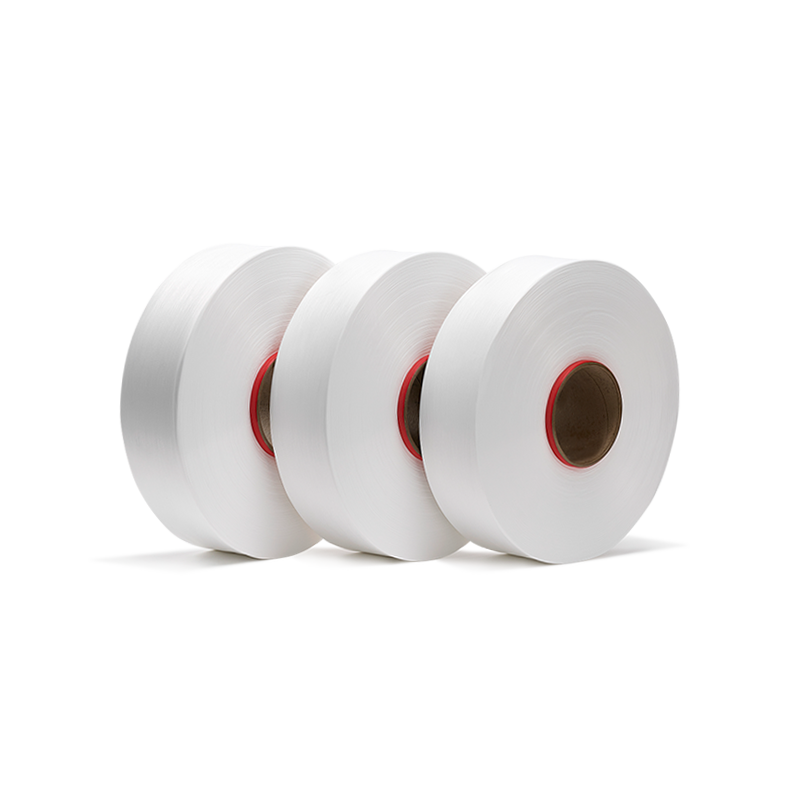
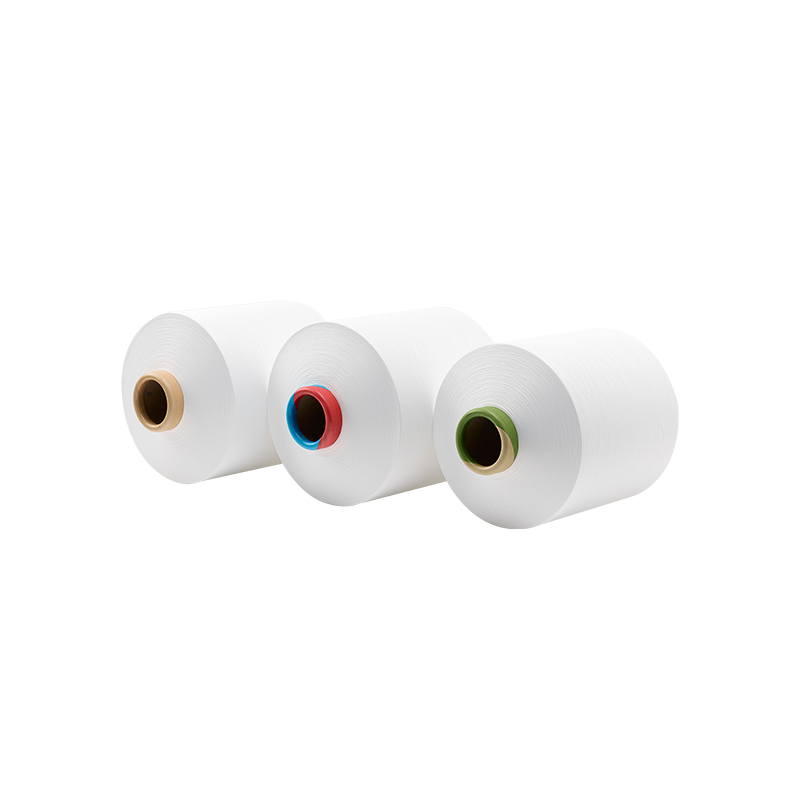 Nylon 6 Chips for Fiber, Film and Engineering GradesFiber-, film- and engineering-grade chips with controlled relative viscosity and low residuals, useful when assessing bio-based nylon supply and downstream conversion.View Product →
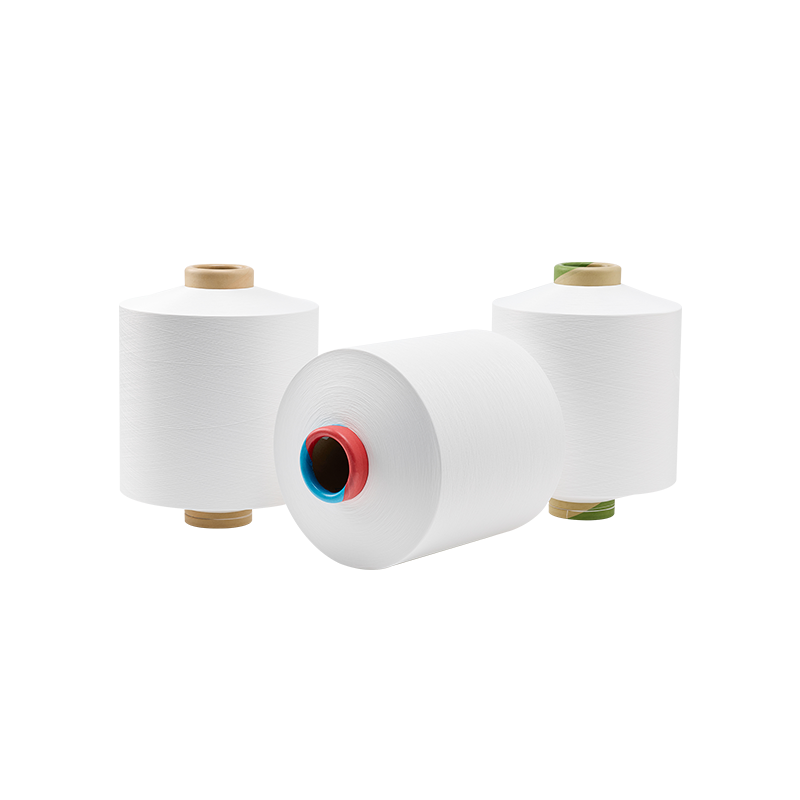 Nylon 6 Partially Oriented Yarn for DTY ProductionPOY in full-dull, semi-dull and bright grades with 19D–184D fineness, monitored for shrinkage and elongation before DTY texturing, relevant to bio-based grade trials.View Product →
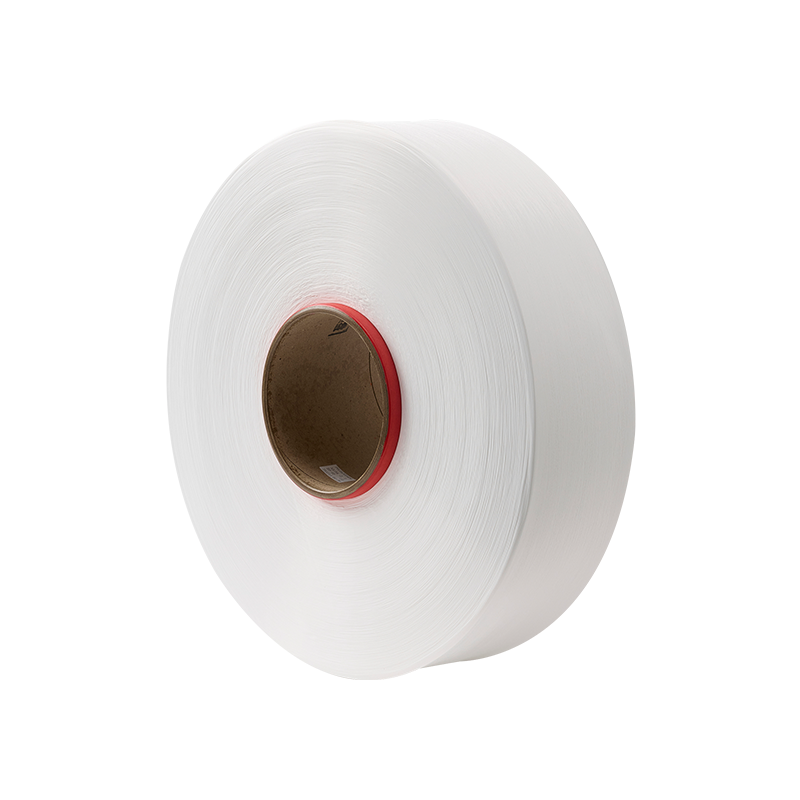 Nylon 6 Fully Drawn Yarn for Apparel FabricsFDY with high orientation, dyeing uniformity and strength across luster grades, used in down jacket and swimsuit fabrics; useful for comparing bio-based FDY options.View Product →
A Purchase Specification Checklist
Six items decide whether a bio-based nylon order delivers what the technical documents promise.
- Verified bio-based carbon content per lot, with the test method named
- Chain-of-custody model and certificate reference number
- Relative viscosity and moisture stated as numbers, not as typical ranges
- Spin finish type and fit with your texturing or covering step
- Reference lot data for evenness, shrinkage and dye shade
- Volume commitment and lead time for repeat orders
Frequently Asked Questions
Is bio-based nylon biodegradable?
No. Bio-based PA6 has the same amide backbone as fossil PA6, so it resists microbial breakdown in soil and water. Bio-based content and biodegradability are separate properties and should be written into the specification separately.
Can bio-based nylon be recycled in existing streams?
Yes for PA6. Because the polymer is chemically identical, mechanical regrinding and depolymerisation back to caprolactam work exactly as they do for fossil PA6.
Does bio-based content reduce fiber strength?
Not for PA6. Tenacity and elongation remain inside normal lot-to-lot variation. Grades built on PA56 or PA11 differ from PA6 in melting point and moisture uptake, so judge them on their own data rather than against a PA6 baseline.
How is the bio-based percentage verified?
Through radiocarbon analysis under ASTM D6866, run on chip or finished yarn, and cross-checked against a chain-of-custody certificate covering the production batch.