English
 Español
 عربى
عربى हिंदी
हिंदी
Nylon 6 POY Yarn: Complete Guide to Properties, Production & Uses
Content
- 1 Understanding Nylon 6 POY Yarn
- 2 The Nylon 6 Polymer Backbone
- 3 What Does Partially Oriented Yarn Mean?
- 4 Inside the POY Spinning Process
- 5 Key Properties and Technical Specifications
- 6 Comparing Nylon 6 POY with FDY, DTY, and HOY
- 7 Applications: Where Nylon 6 POY Is Used
- 8 Selecting the Right POY for Your Process
- 9 Making POY Work for Your Supply Chain
Understanding Nylon 6 POY Yarn
When a spinning mill evaluates incoming POY, two numbers dominate the conversation: residual elongation and draw ratio. A Nylon 6 POY with 130% elongation behaves very differently from one with 80%, and that gap determines everything from false‑twist efficiency to dye uptake. This article breaks down the properties, production, and downstream uses of Nylon 6 partially oriented yarn, so textile engineers and sourcing teams can align specifications with real process needs.
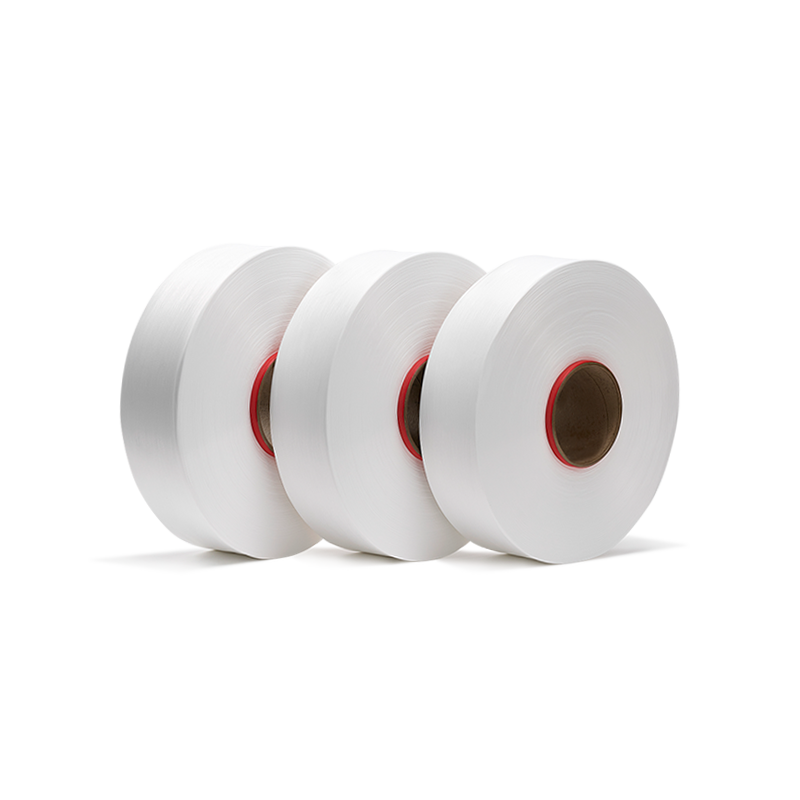
Partially oriented yarn occupies a unique middle ground in the nylon filament supply chain. It is not a final textile yarn; instead, it is the critical semi‑product that goes on to become draw‑textured yarn (DTY), fully drawn yarn (FDY) blends, or is drawn in‑line during knitting. The choices made at POY stage — denier, number of filaments, spin finish, orientation level — cascade into every downstream operation. Knowing those pivot points is what separates a reliable supply from a batch that generates off‑spec seconds.
The Nylon 6 Polymer Backbone
Everything starts with caprolactam — ring‑opening polymerization produces polyamide 6, a semi‑crystalline thermoplastic distinguished by its amide group spacing and moisture regain of around 4.5%. For POY spinning, chip quality is non‑negotiable. The polymer is delivered as nylon 6 chips with a relative viscosity typically in the 2.4–2.7 range, controlled amino‑end group levels, and low cyclic dimer content. Even a 0.05 swing in relative viscosity can shift the melt‑flow behavior enough to alter filament cross‑section consistency.
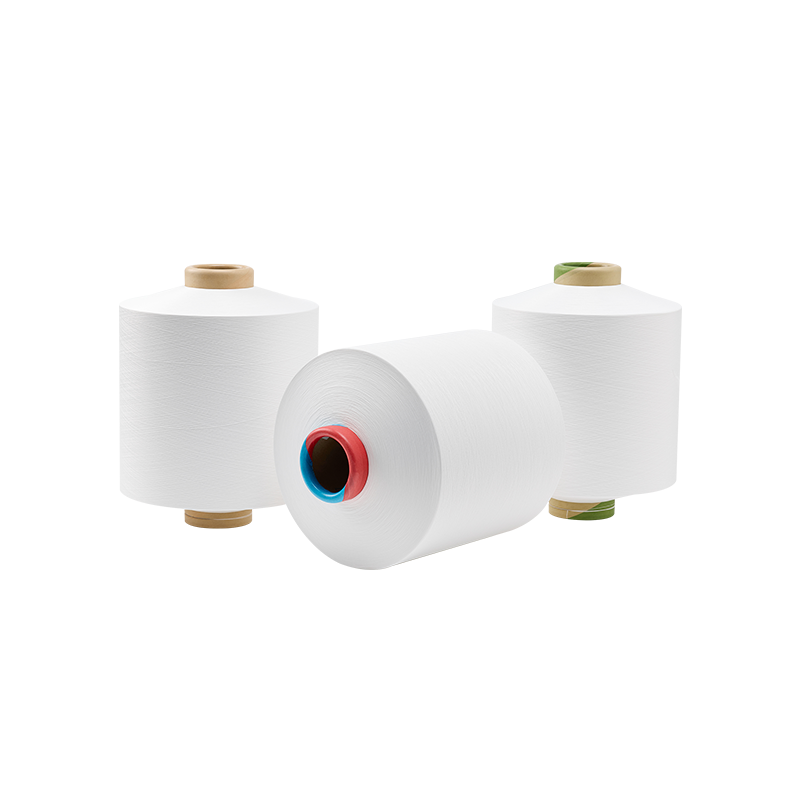
Nylon 6’s broad processing window — melting point near 220°C and thermal stability up to 270°C when oxygen is excluded — makes it the material of choice for high‑speed POY spinning. Compared with Nylon 66, Nylon 6 offers a slightly softer hand and better dye uniformity at lower temperatures, which downstream knitters and weavers consistently prefer for next‑to‑skin applications.
What Does Partially Oriented Yarn Mean?
The term “partially oriented” describes the molecular architecture. In melt spinning, polymer chains begin random, but as the filament is stretched and rapidly cooled, some orientation develops along the fiber axis. POY stops the process before full orientation — the yarn emerges with a moderate crystallinity and a high residual elongation, typically 80–150%. That elongation is not a defect; it is the stored energy that texturing machines consume to produce bulk and softness in DTY.
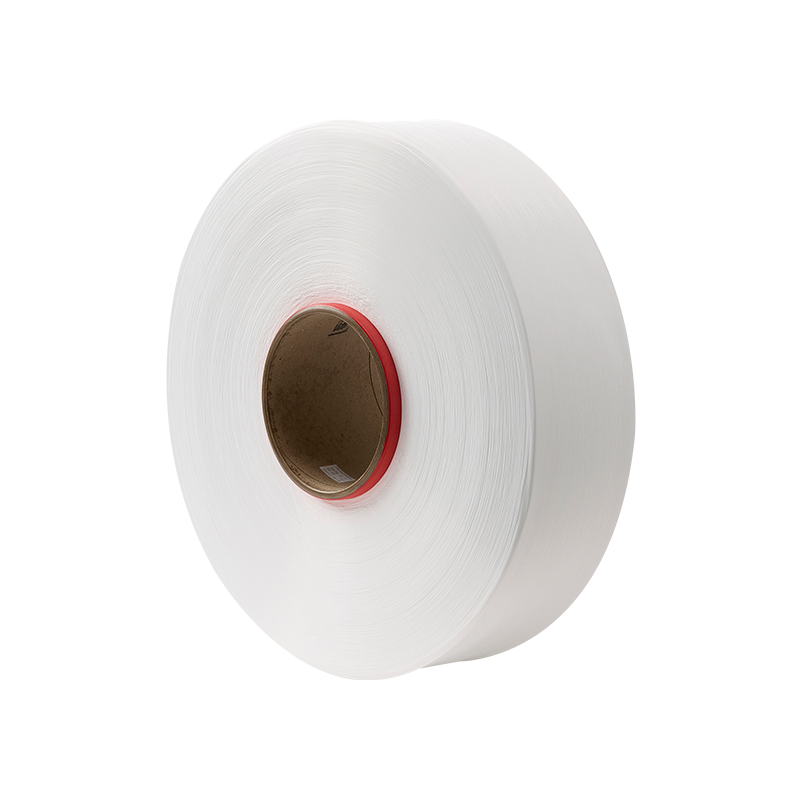
In practical terms, POY is wound at speeds between 3,000 and 4,000 m/min. It is uncrimped, flat, and cannot be used directly in most weaving or knitting because it would stretch unpredictably and shrink in finishing. The downstream process — whether simultaneous draw‑texturing or sequential drawing — completes the orientation and locks in the final mechanical properties.
Inside the POY Spinning Process
Modern POY lines consist of a screw extruder feeding a precisely metered spinning pump, a heated pack with high‑filtration media, a spinneret with capillaries matching the target filament count, and a controlled quench system. Monofilaments exit into a cross‑flow quench cabinet where laminar air at 18–22°C solidifies them within a short distance. Uniform air velocity is the single biggest factor in limiting filament‑to‑filament denier variation.
After quenching, the filaments converge at an oil application nozzle. Spin finish — a water‑based emulsion with antistatic, lubricating, and cohesive components — is applied at pickup levels of 0.4–0.9%. The yarn then passes around a set of godet rollers that establish the take‑up speed and apply a draw ratio of less than 1.0, imparting partial orientation. Finally, the yarn is wound onto packages at controlled winding tensions, usually with traverse ratios designed to avoid ribboning. Package dimensions, typically 200–300 mm traverse, influence how the yarn feeds in subsequent texturing.
Key Properties and Technical Specifications
No single POY data sheet fits every application, but the table below captures the typical range for a standard 70 denier / 24 filament Nylon 6 semi‑dull POY. Variations in denier, filament count, and intermingle conditions tailor the yarn to specific downstream processes.
| Parameter | Value |
|---|---|
| Denier | 70D |
| Filaments | 24 |
| Tenacity (cN/dtex) | 3.0–3.5 |
| Elongation at break (%) | 90–130 |
| Boiling water shrinkage (%) | 6–12 |
| Oil pickup (%) | 0.4–0.8 |
| Uster CV% | ≤1.5 |
Tenacity in POY is deliberately moderate because the yarn will be drawn later. Elongation is the key control lever: a POY with elongation below 80% risks filament breakage during texturing, while a POY above 150% can cause incomplete drawing and variable dye uptake in the final fabric. Shrinkage parameters also demand attention — excessive boil‑off shrinkage indicates under‑stabilization that will surface as width loss in garment panels.
Comparing Nylon 6 POY with FDY, DTY, and HOY
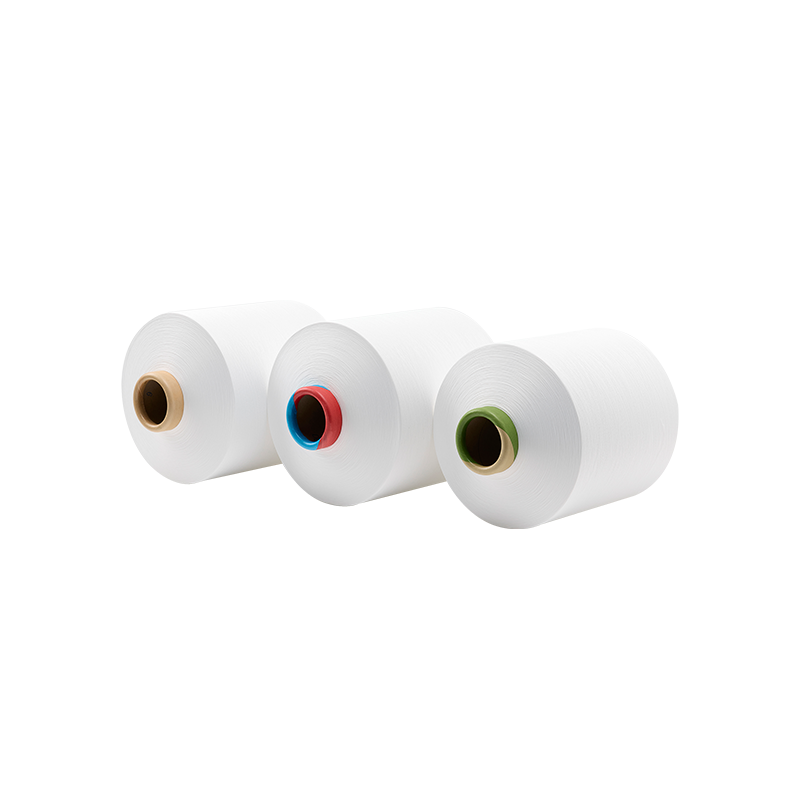
POY’s role becomes clear when placed alongside its close relatives. Fully drawn yarn (FDY) completes drawing and orientation during spinning, delivering a ready‑to‑use flat yarn with high tenacity and low elongation. Draw‑textured yarn (DTY) is the product you get after running POY through a false‑twist texturing machine — crimped, elastic, and bulkier. High‑oriented yarn (HOY) sits between POY and FDY in orientation, with some drawing already in‑line, often used for direct knitting where intermediate draw ratios can be applied.
When you need a flat yarn with no after‑processing, the nylon fully drawn yarn route makes sense, as detailed in our nylon DTY vs nylon FDY comparison. For converters who want to control bulk and hand, POY is the input. Understanding the contrast with HOY is equally practical — our POY vs HOY differences guide breaks down orientation levels and after‑processing demands. When you are ready to specify denier, filament count, and oil type for your supply chain, nylon partially oriented yarn product page offers the most current range data.
Applications: Where Nylon 6 POY Is Used
Although POY is not an end‑use yarn, it powers a wide spectrum of textile goods. The largest volume goes into false‑twist texturing to produce DTY for hosiery, seamless garments, lingerie, and sportswear. In these applications, the consistent elongation and even dyeability of nylon 6 POY translate directly into first‑grade yield at the knitting machine.
Another channel is direct beaming onto sectional warps for narrow‑width elastics and automotive airbag fabrics, where POY is drawn on‑loom or during beam preparation. Industrial sewing thread also starts with a nylon POY that is subsequently drawn and twisted to a balanced torque finish. Even in non‑textured form, POY enters the floor as by‑product or super‑micro filament knits where in‑line drawing at the knitting head eliminates a separate texturing step.
Selecting the Right POY for Your Process
Procurement teams should evaluate five dimensions when qualifying a Nylon 6 POY source:
- Denier and filament profile: Match the final fabric’s weight and hand. Lighter deniers (20–40D) suit ultra‑sheer hosiery; 70–100D are workhorses for seamless wear; 140D and above target industrial knits and elastics.
- Number of filaments: More filaments at the same denier (e.g., 70/48 vs 70/24) produce a softer, more pliable texture but demand gentler handling in texturing to avoid broken filaments.
- Cross‑section: Round, trilobal, or other cross‑sections alter luster and moisture transport. Trilobal POY, for instance, gives a brilliant sheen to functional legwear without post‑dyeing coating.
- Spin finish chemistry: The oil must be compatible with the texturing machine’s heater settings and the downstream scouring regime. High‑temperature finishes reduce fume generation during DTY setting, while low‑cohesion finishes minimize splicing knots.
- Intermingle and package build: Interlace knots per meter and package density influence unwinding behavior. An inconsistent package build causes tension peaks at the texturing creel, raising break rates and machine stops.
Pilot trials remain the gold standard. Running a 5‑spindle trial on the target texturing frame reveals more about elongation compatibility and dye uniformity than any certificate can promise.
Making POY Work for Your Supply Chain
Nylon 6 POY is not a commodity where one reel equals another. The difference between a consistently drawn DTY and a batch that costs hours in break‑related downtime often comes down to the interplay of residual elongation, oil pickup uniformity, and filament‑to‑filament evenness. Treating POY as a strategic input — with clear specifications, regular on‑site audits, and shared shrinkage data — turns a raw material purchase into a process stability tool.
As lightweight knits, compression wear, and seamless construction continue to grow, the demand for finer‑denier, higher‑filament Nylon 6 POY with tighter CV% limits will accelerate. Mills that lock in quality at the POY stage insulate their downstream operations from variability that no amount of machine adjustment can fully correct.