English
 Español
 عربى
 हिंदी

Nylon Characteristics: Strength, Moisture, Heat and Processing Reality
Content
A dry bag of nylon 6 chip left in an air-conditioned warehouse will pull close to 4 percent of its own weight in water out of the air within a few days. That number, more than tenacity or luster, decides whether a spinning line runs clean or breaks filaments at the spinneret.
Nylon characteristics are measurable, and they trade against each other. Raising crystallinity buys strength and stiffness but costs dye saturation and elongation. Allowing moisture in improves toughness and kills static, yet it softens the polymer and moves dimensions. Anyone specifying PA6 chip, POY, HOY, FDY, DTY or ACY is really choosing a position on those curves.
What follows is a practical reading of the characteristics that end up in purchase specifications, and how each one behaves at the chip stage versus the yarn stage.
What nylon characteristics actually describe
Nylon characteristics are the measurable mechanical, hygroscopic, thermal and chemical behaviours of a polyamide, grouped that way because each group is controlled by a different part of the process.
The backbone is a chain of carbon atoms joined by amide linkages. Those amide groups hydrogen-bond to one another, and that single structural feature is where nylon gets its strength, its melting point and its moisture uptake at the same time. Push one property up and the others move with it.
PA6 and PA66 dominate commercial supply. PA6, polymerised from caprolactam, melts around 215 to 225 C and regains more moisture. PA66 melts near 255 to 265 C and holds dimensions better in humid air. For textile filament, PA6 is the workhorse because it spins, draws and textures at lower temperatures and takes acid dyes easily.
- Mechanical: tenacity, elongation at break, modulus, elastic recovery, abrasion loss and creep.
- Hygroscopic: moisture regain, drying rate, dimensional swell and static build-up.
- Thermal: melting range, softening point, glass transition, shrinkage and heat ageing.
- Chemical: acid and alkali resistance, solvent attack, UV stability and hydrolysis.
Grade-level detail belongs in a dedicated reference, and this breakdown of PA6 chip properties, grades and applications separates fiber, film and engineering grades rather than treating PA6 as one material.
Strength, elasticity and abrasion in service
Textile-grade nylon filament typically tests at 4 to 8 cN/dtex tenacity with elastic recovery close to 100 percent at 3 percent extension, which is why it survives repeated flexing where stiffer filaments crack.
Tenacity is usually quoted dry, and nylon is one of the few fibres that loses strength when wet, roughly 10 to 15 percent, while gaining elongation. Wet performance matters in fishing line, filter cloth, marine rope and anything that stays outdoors through a rainy season.
The weak mechanical point is creep. Under sustained load above roughly 40 percent of breaking load, nylon keeps extending slowly for months. Bolted nylon parts relax, permanently tensioned ropes need re-tensioning, and a bearing that was dimensionally perfect on day one can develop play by month six. Glass-filled compounds and higher crystallinity reduce the effect but never remove it.
Moisture regain, heat and chemical limits
Moisture regain controls drying, static and dimensional change, thermal limits set safe processing temperatures, and chemical resistance decides where nylon is the right material at all.
- Dry to target, typically below 0.05 percent for virgin chip and below 0.08 percent for regrind blends.
- Hold the dew point, because a cold hopper pulls moisture back into dry chip within a few hours.
- Verify at the machine throat with a moisture analyser, not at the dryer outlet.
- Re-dry after any storage break longer than one shift, especially in humid weather.
On heat, PA6 melts at 215 to 225 C and PA66 at 255 to 265 C. Continuous service for moulded PA6 parts is usually capped near 100 to 120 C, and the glass transition sits around 50 to 60 C when dry but drops sharply as moisture is absorbed. A part that feels rigid at 20 C can soften noticeably at 60 C in a humid plant.
Chemically, nylon resists alkalis, oils, greases and most organic solvents. It does not resist strong acids, phenols or formic acid, and it hydrolyses in hot acidic water. Unstabilised nylon yellows and embrittles under UV, so outdoor grades need a stabiliser package rather than a surface coating.
How the profile shifts from chip to yarn
Chip is bought on viscosity, moisture and extractables, while yarn is bought on tenacity, elongation, shrinkage and dye uniformity, so the same polymer is judged by entirely different numbers at each stage.
| Stage | Characteristic that decides acceptance | What drifts first |
| PA6 chip | Relative viscosity, moisture, extractables | Viscosity spread between batches |
| POY | Orientation, elongation, boil-off shrinkage | Elongation creep along the package |
| HOY | Orientation, lower elongation, dye uniformity | Shade variation after dyeing |
| FDY | Tenacity, shrinkage, broken filament count | Shrinkage uniformity within a lot |
| DTY | Crimp, bulk, broken filaments | Crimp stability after storage |
| ACY | Coverage, stretch, recovery | Coverage gaps at low draft |
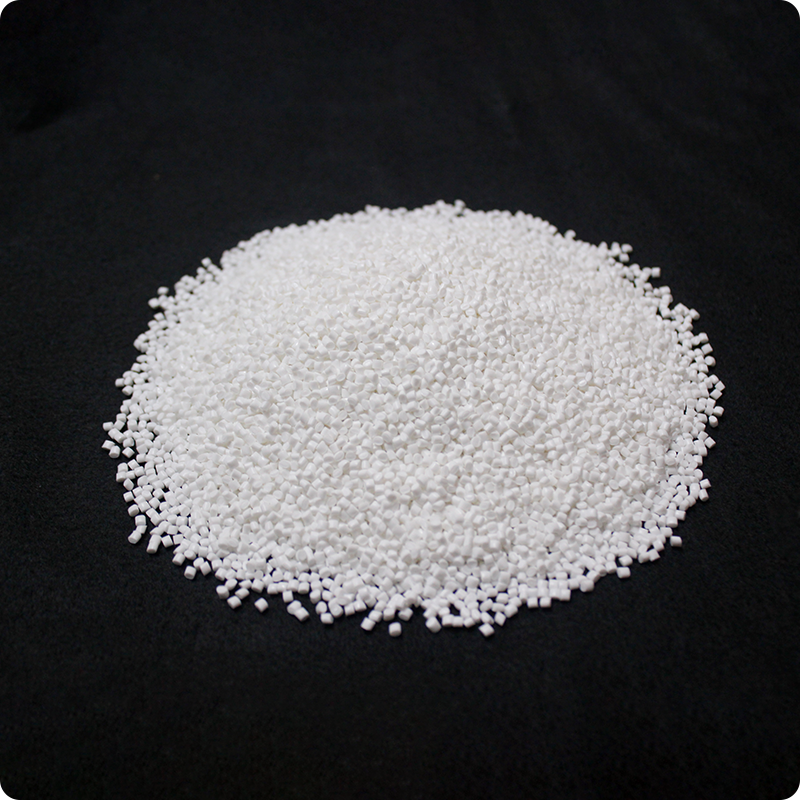 Nylon 6 Chips for Fiber, Film, and EngineeringThree grades support stable spinning, barrier film, and compounding; fiber-grade RV deviation within ±0.02 helps keep draw points stable downstream.View Product →
A chip buyer and a yarn buyer are looking at the same polymer through different windows. Tight viscosity control at the chip stage is what makes a spinner's life easy: the draw point stays stable, breaks fall, and shade repeatability improves without changing a single setting downstream.
That is also why vertically integrated supply shortens the learning curve. When chip, POY, HOY, FDY, DTY and ACY come from one chain, a filament problem can be traced back to a viscosity batch instead of negotiated between three suppliers. The mechanics of that handover are covered in this look at how chip and yarn choice shape spinning.
Matching characteristics to your process
Match the characteristic to the failure you cannot afford: specify chip on viscosity consistency for spinning, POY on elongation stability for texturing, and FDY on shrinkage uniformity for warp preparation.
If you spin
- Viscosity range per batch matters more than the average.
- Moisture at the throat, checked hourly during humid spells.
- Filter pressure rise as the earliest warning of gel or contamination.
If you texture or cover
- Elongation stability along the package, not just at the start.
- Boil-off shrinkage consistency between lots.
- Broken filament count, since one break stops a spindle.
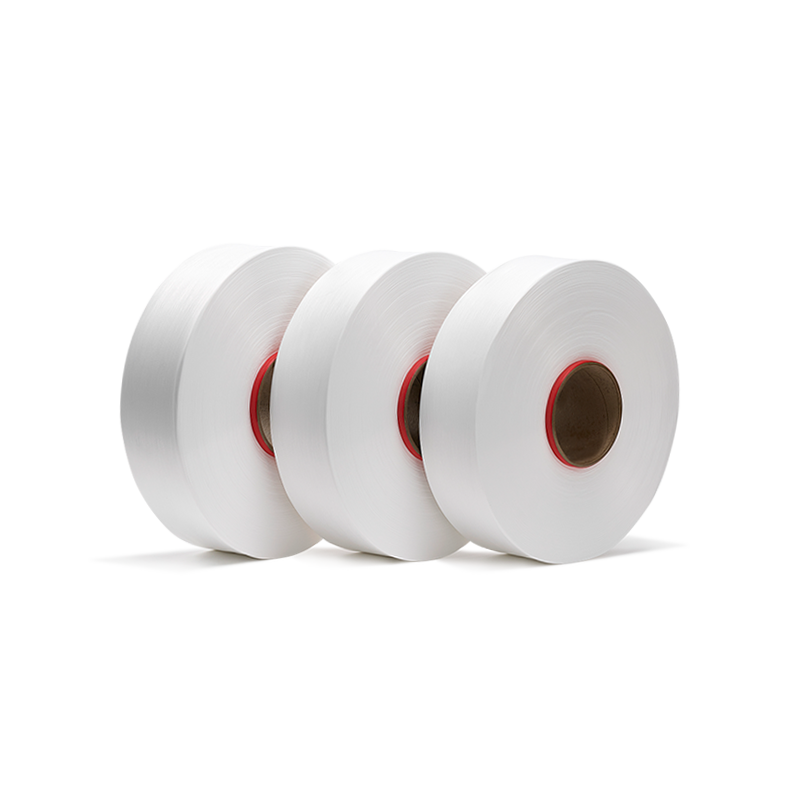 Nylon 6 Partially Oriented Yarn for DTYLow-orientation POY with controlled elongation and shrinkage ranges is intended for DTY, where stable texturing performance matters more than a single certificate value.View Product →
Texturing is the least forgiving stage, because a small shift in POY elongation changes crimp, bulk and dye uptake at once. Buyers who audit the range rather than the certificate value are the ones who stop chasing shade corrections later in the season.
Questions buyers ask about nylon characteristics
Is nylon weaker when wet?
Yes. Standard nylon loses roughly 10 to 15 percent of its dry tenacity when saturated and gains elongation at the same time. That is the opposite of cotton, which gets stronger wet, and it is why wet-strength allowances belong in rope and filter specifications.
Why does a synthetic fibre absorb moisture at all?
The amide groups in the polymer chain form hydrogen bonds with water molecules, so moisture sits inside the fibre rather than only on the surface. PA6 regains around 3.5 to 4.5 percent at standard conditions, PA66 about 2.5 to 3 percent, and polyester stays below 0.5 percent.
Does PA6 or PA66 handle heat better?
PA66, consistently. Its melting range sits near 255 to 265 C against 215 to 225 C for PA6, and it holds modulus to a higher temperature. PA6 compensates with easier processing, better dye uptake and a wider soft-hand window for textile filament.
What limits nylon in outdoor use?
UV light and hydrolysis. Unstabilised nylon yellows, embrittles and loses tenacity within a season of direct sun, and hot acidic moisture attacks the amide linkage. Stabilised grades plus a dry, shaded end use extend service life considerably.