English
 Español
 عربى
عربى हिंदी
हिंदी
Spinning Textiles: How Nylon 6 Chip and Yarn Choice Shapes Output Quality
Content
- 1 What Spinning Textiles Covers Inside a Nylon 6 Supply Chain
- 2 Chip Grade Sets the Ceiling on Every Downstream Result
- 3 Mapping Yarn Types to the Conversion Step That Produces Them
- 4 Specifications, Tolerances, and Where Supply Risk Actually Hides
- 5 A Four-Step Sourcing Process That Prevents Most Line Stoppages
- 6 Frequently Asked Questions About Spinning Textiles and Nylon Sourcing
A texturing mill that suddenly runs six percent waste instead of two and a half rarely finds the answer on the machine. It usually traces back to a feedstock decision made weeks earlier: a chip lot with a wider relative viscosity window than agreed, a POY package with uneven oil pickup, or an FDY lot whose elongation drifts from one carton to the next. Spinning textiles is a chain of conversions, and every step inherits the tolerances of the step before it.
That inheritance is what makes the subject harder than it looks. Chip suppliers quote averages, spinners quote process windows, and weavers quote fabric defects, and the three numbers are rarely connected in the same document. The sections below connect them, from nylon 6 polymer chips through POY, HOY, FDY, DTY, and air-covered yarn, so that a buyer or a process engineer can name the variable that actually matters before the next purchase order is signed.
What Spinning Textiles Covers Inside a Nylon 6 Supply Chain
Spinning textiles is the conversion stage that turns polymer feedstock into usable yarn, and in the nylon 6 chain it is four linked processes rather than one: melt spinning, drawing, texturing, and covering.
Working definitionSpinning textiles, in the nylon context, means the sequence of melt-spinning and downstream yarn processes that convert nylon 6 chips into POY, HOY, FDY, DTY, and ACY yarns, each aimed at a different downstream textile operation.
Each stage exists because the previous one leaves the filament in a state that can be stored but not yet used. Partially oriented yarn is deliberately under-drawn so that it can be drawn and textured later. Fully drawn yarn is finished at the spinner. Textured and covered yarns add bulk, stretch, or hand feel. Skipping or duplicating a stage changes the economics of the whole chain, which is why two suppliers can quote the same denier at very different prices.
- Melt spinning: chips are dried, melted, filtered, and extruded into filaments that are quenched and wound.
- Drawing: filaments are stretched to orient the polymer chains and to set tensile strength and elongation.
- Texturing: crimp, bulk, and stretch are added, usually through false-twist texturing in the same plant.
- Covering: an elastomeric core is wrapped with nylon to produce air-covered yarn for stretch fabrics.
The practical consequence for buyers is that one yarn specification can describe two different commercial products depending on which stages the supplier performs on site. A producer that runs polymerization and spinning in the same plant, such as Zhejiang Fangyuan New Material, is effectively selling you the option to skip the drawing step yourself, and that option has a cost that shows up in yield rather than in the price per kilogram.
Chip Grade Sets the Ceiling on Every Downstream Result
Chip grade is the hardest constraint in the chain, because relative viscosity, luster, and additive package are fixed at polymerization and cannot be corrected later by spinning or texturing.
Fibre grade, film grade, and engineering grade nylon 6 are not interchangeable. They differ in molecular weight distribution, additive content, and the level of contamination control applied during polymerization, and each one is tuned for a different forming process. A spinner who accepts engineering grade chip because it was offered at a discount will see the result within a shift: filter pressure climbs, filament breaks increase, and drawability falls away.
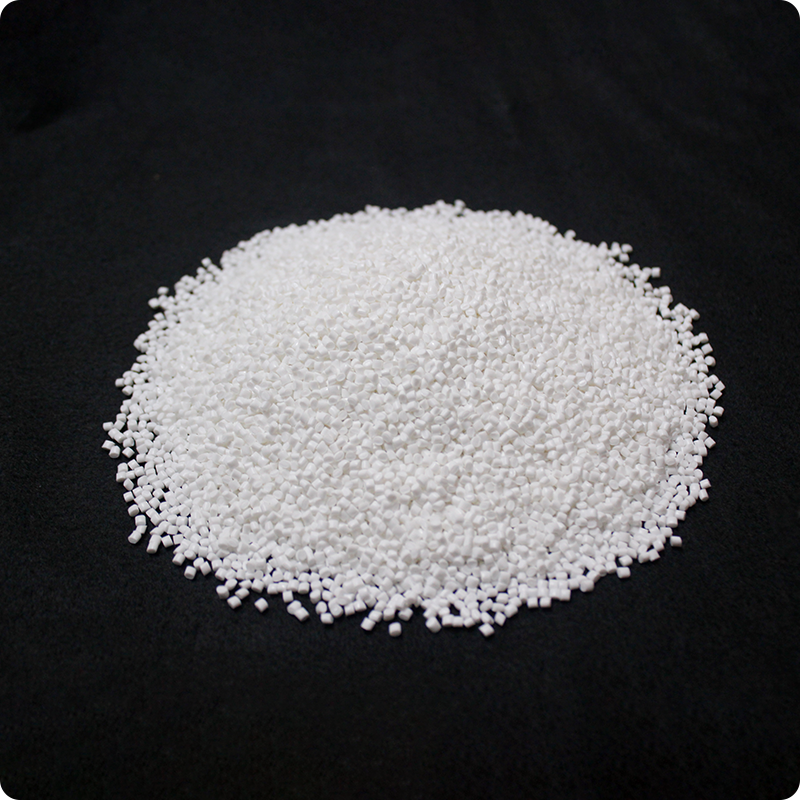
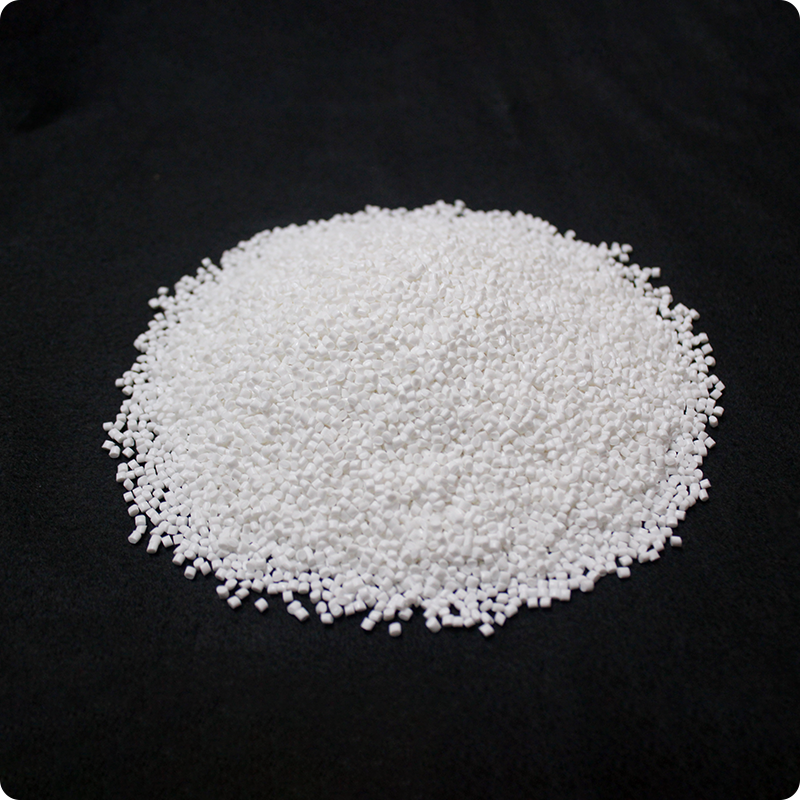 Nylon 6 Chips for Fiber, Film, and Engineering ApplicationsView bulk nylon 6 chip grades for spinning, biaxially oriented nylon film, and compounding, with RV controls and integrated polymer-to-yarn validation.View Product →
| Grade | Optimized for | Textile destination | Failure pattern if substituted |
| Fibre grade | Fine filament melt spinning | POY, HOY, FDY, DTY, ACY | Reference case, no substitution penalty |
| Film grade | Cast and blown film extrusion | None in textile yarn | Gels, filtration blockage, draw breaks |
| Engineering grade | Injection moulding of parts | None in textile yarn | Low drawability, brittle filament, high waste |
Luster matters more than it sounds. Titanium dioxide content changes the friction behaviour of the filament, so a mill that runs bright yarn one week and full dull the next will see different tension profiles on the same machine with the same settings. Sourcing all three lusters from one polymerization source removes a variable that is otherwise invisible in the finished fabric.
Mapping Yarn Types to the Conversion Step That Produces Them
Every nylon yarn name describes the conversion step it has completed rather than a quality tier, which is why a cheaper POY and a more expensive HOY can both be the correct purchase for the same weaving mill.
The choice between nylon HOY and POY usually comes down to one question: does the mill want to own the drawing step? The two products are chemically similar and commercially very different.
POY: the flexible intermediate
POY is wound at roughly 3,000 to 4,000 metres per minute, fast enough to orient the polymer partially but not enough to finish it. Residual draw ratio is high, typically 1.4 and above, which is exactly why a texturing or draw-warping mill buys it: the remaining orientation is work you can still perform yourself, and the yarn is cheaper per kilogram because of it. The trade-off is a shorter shelf life and more sensitivity to storage temperature.
HOY: the finishing shortcut
HOY is spun at higher speeds and sometimes with an in-line draw step, so the filament arrives with most of its orientation already built in. Residual draw ratio is low, often close to 1.2, and the yarn is stable enough to weave or knit directly. You pay more per kilogram and you give up flexibility, but you also remove a process step, its labour, its energy cost, and its breakage risk from your own plant.
A yarn specification sheet tells you what a supplier can measure. A process window tells you what your line can tolerate. Yield is lost in the gap between the two.
Beyond those two, FDY arrives fully drawn and ready for direct warping. DTY adds crimp and bulk through false-twist texturing. ACY wraps an elastomeric core with nylon for stretch fabrics and narrow elastics. A mill that buys POY for texturing, FDY for warp beams, and ACY for stretch panels is not being inconsistent, it is matching each yarn to the operation that will consume it.
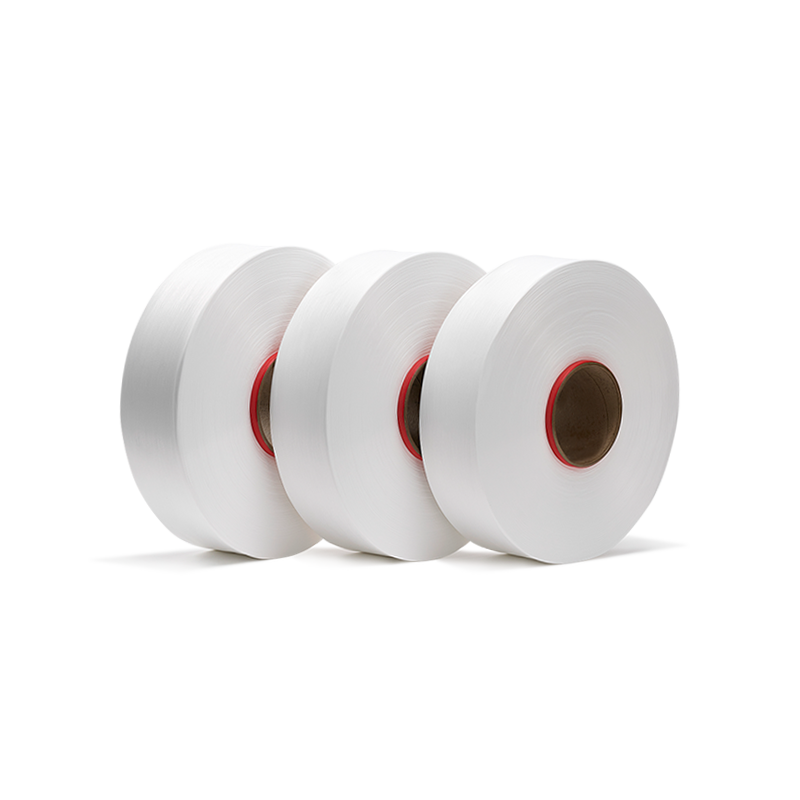
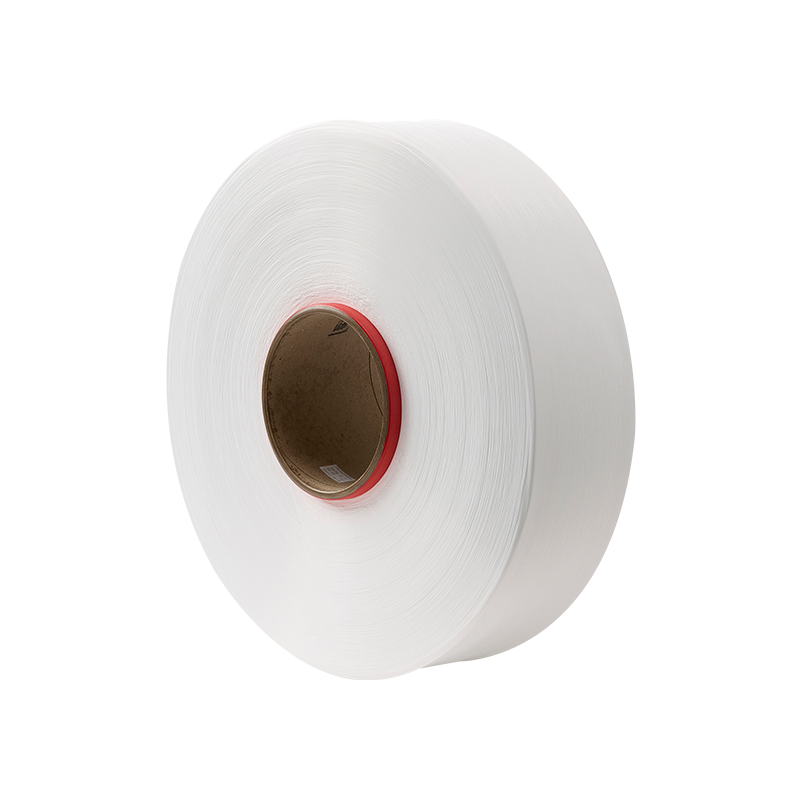 Nylon 6 High Oriented Yarn for Lace and LiningsView high-stretch nylon 6 HOY with low boiling-water shrinkage, luster options, and fine deniers for lace and lining fabrics.View Product →
Specifications, Tolerances, and Where Supply Risk Actually Hides
Most quality arguments in spinning textiles are settled by three numbers that never appear on a certificate of analysis: denier coefficient of variation, elongation CV, and oil pickup consistency.
Averages hide everything that matters. Two lots with identical mean elongation can behave completely differently on a texturing machine if one has a tight distribution and the other has a long tail, because the breaks happen at the tail, not at the mean. This is the single most common reason a pilot lot runs clean and the bulk order does not.
| Parameter | Why it decides performance | Practical check |
| Relative viscosity | Sets drawability, tenacity, and dye uptake | Request the last ten lot values, not one |
| Denier CV | Controls fabric evenness and dye streaks | Compare intra-package and inter-package CV |
| Elongation CV | Drives breaks on high-speed texturing | Flag distributions with a long upper tail |
| Oil pickup | Determines friction, static, and winding tension | Check finish uniformity against moisture balance |
| Package density | Affects unwinding tension and balloon stability | Weigh random packages across the pallet |
Supply risk in nylon rarely arrives as a rejected lot. It arrives as a slow drift: a supplier quietly widening a tolerance window, changing a spin finish, or moving production to a different line after a capacity reshuffle. Buyers who track lot-level data catch that drift within one delivery. Buyers who track certificates catch it when the fabric fails.
A Four-Step Sourcing Process That Prevents Most Line Stoppages
The most reliable way to buy nylon feedstock is to treat it as a process qualification rather than a commodity purchase, which means four steps in a fixed order.
- Define the process window before discussing price. Write down the denier, elongation, and shrinkage range your machines actually tolerate, and treat everything outside that band as unacceptable regardless of how attractive the quotation looks.
- Request lot-level data rather than certificate averages. Ten consecutive lots of relative viscosity, denier CV, and elongation CV tell you more about a supplier than any single sample ever will.
- Run a pilot lot with full traceability. Keep the lot number, the machine it ran on, and the defect rate. This becomes the reference point for every future dispute and for every future specification change.
- Fix batch control and delivery cadence in the agreement. Specify how a batch is defined, how changes are notified, and how quickly repeat orders ship, because a technically perfect yarn that arrives three weeks late still stops a line.
Vertically integrated supply is the quiet answer to most of these risks. When chip polymerization, spinning, and texturing happen on one site, a specification change has to be agreed internally before it reaches a customer, and lot traceability stops being a research project.
For mills that texture and cover in-house, the relevant products in that chain are DTY and ACY, both of which depend on the drawing and covering steps being matched to the downstream machine rather than to a generic specification.
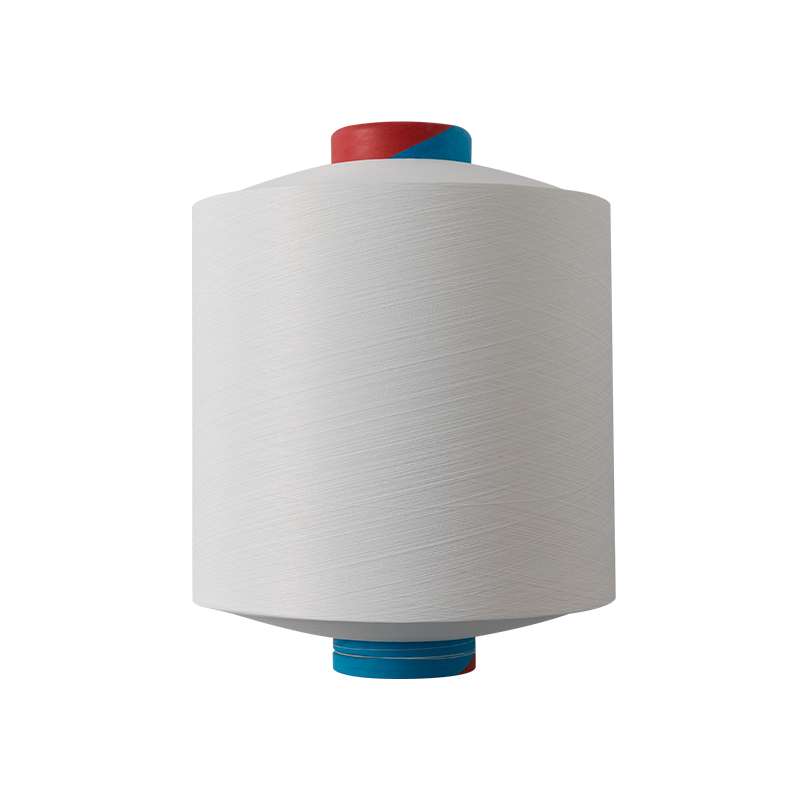 Nylon 6 Draw Textured Yarn for Stretch and Comfort FabricsView bulky nylon 6 DTY with elasticity, luster options, and DPF choices for yoga wear, children's clothing, and other stretch textiles.View Product →
Frequently Asked Questions About Spinning Textiles and Nylon Sourcing
These are the questions that come up most often once a buyer moves from comparing prices to comparing process capability.
What does spinning textiles include in nylon manufacturing?
It covers the conversion of nylon 6 chips into usable filament yarn: melt spinning, drawing, texturing, and covering. The output of those stages is POY, HOY, FDY, DTY, and ACY, each aimed at a specific downstream textile process rather than at a specific quality level.
Should a weaving mill buy POY, HOY, FDY, or DTY?
Buy POY only if you intend to draw or texture in-house. Buy HOY or FDY when you want dimensional stability straight off the package for weaving or knitting. Buy DTY when you need bulk and stretch, and ACY when you need a wrapped elastomeric core.
How much does chip grade really affect yarn quality?
It sets the ceiling. Relative viscosity, luster, and additive package are fixed at polymerization, so a spinner can never recover drawability or filtration performance that the chip never had. Substituting film or engineering grade chip into a filament line usually shows up as filter pressure and break rate within a single shift.
What should a nylon yarn supply agreement cover?
Four things: the accepted specification window, batch-level traceability, a notification process for any change in raw material or production line, and a committed delivery cadence. Without those four clauses, a supply agreement is a price list rather than a risk control.
Spinning textiles rewards buyers who measure distributions instead of averages, and suppliers who can prove their numbers lot by lot.