English
 Español
 عربى
عربى हिंदी
हिंदी
Nylon HOY Complete Guide | High-Oriented Nylon Yarn Process
Content
What Is Nylon HOY?
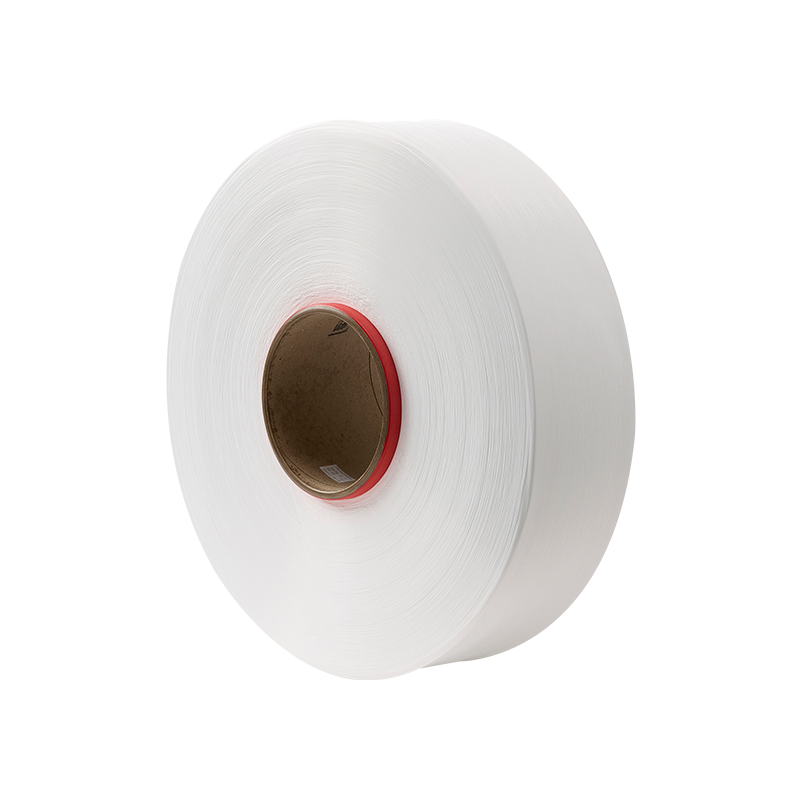
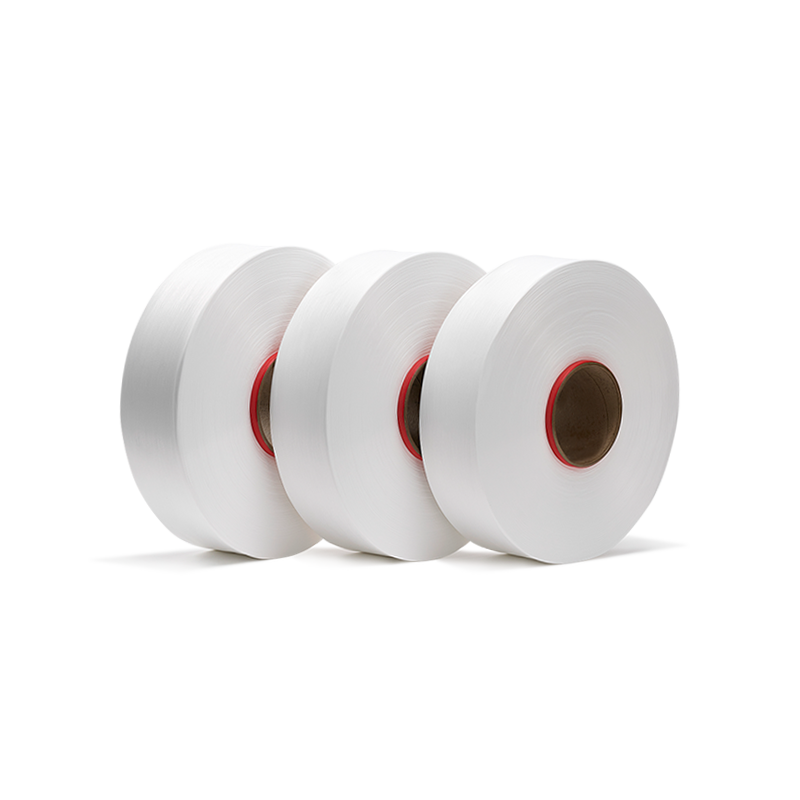
When a warp knitting mill evaluates a direct-use yarn, the central question is whether it can eliminate a separate drawing step without sacrificing fabric elasticity. Nylon HOY—High Oriented Yarn—is engineered precisely for that scenario. It is produced through high-speed spinning, typically in the 4000–6000 m/min range, which imparts enough molecular orientation and partial crystallization to create a yarn that lies structurally between POY and FDY. The process bypasses the subsequent hot drawing stage required for POY, delivering a product with high elongation at break and inherently low boiling water shrinkage. This built-in orientation is what gives HOY its name: the polymer chains achieve a higher degree of alignment than POY, yet remain more extensible than fully drawn FDY, making the yarn ready for direct warping and knitting with minimal pre-treatment.
Key Performance Indicators of Nylon HOY
Two properties dominate buyer evaluation: elongation at break and boiling water shrinkage. A well-controlled HOY lot will exhibit elongation values comfortably above 60%, often exceeding 90% for finer deniers, while boiling water shrinkage stays in a low single-digit percentage range. This combination means the fabric experiences less aggressive contraction during wet finishing, reducing the need for pre‑shrinking and helping dyers hit target dimensions more reliably. Alongside these, buyers should track breaking tenacity—typically 3.5‑4.5 cN/dtex—and, critically, package‑to‑package uniformity. Even small variations in elongation or shrinkage translate directly into off‑tension bars and dye‑take‑up differences on the knitting machine. For detailed specification data on nylon 6 HOY, consult our nylon 6 HOY yarn properties resource. Low and consistent shrinkage is the single most impactful advantage for downstream processes.
Nylon HOY vs POY vs FDY: How to Choose?
The decision hinges on whether your process can accommodate an intermediate drawing stage and what fabric hand you are targeting. POY is an undrawn intermediate that must be texturized or drawn before use; it offers maximum flexibility for air‑texturing but adds cost. FDY is fully drawn, giving the highest strength and a crisp fabric hand, yet its stiffness can limit elasticity‑driven designs. HOY occupies the middle ground: it is directly usable, provides the elasticity that FDY lacks, and simplifies pre‑treatment. The table below summarizes the fundamental contrasts.
| Property | Nylon POY | Nylon HOY | Nylon FDY |
|---|---|---|---|
| Spinning & drawing | Low‑speed, undrawn intermediate | High‑speed, oriented but not fully drawn | Fully drawn post‑spinning |
| Typical elongation at break | High (≳120%) | High (60‑100%) | Moderate (25‑50%) |
| Boiling water shrinkage | Uncontrolled without drawing | Low (typically 4‑8%) | Low (often <7%) |
| Direct use readiness | No—requires texturing or drawing | Yes—ready for warping & knitting | Yes—often requires pre‑shrinking |
| Fabric character | N/A (intermediate) | Soft, elastic, good drape | Crisp, high strength, stable |
If your fabric requires stretch and a soft hand—think lace or intimate apparel—HOY is the more efficient path. For structured outerwear that demands dimensional stability, FDY often wins. Choosing HOY eliminates one full processing stage compared to POY, directly cutting energy and time in the supply chain. For a detailed side‑by‑side analysis, read our nylon HOY vs nylon POY comparison.
Main Applications of Nylon HOY
The yarn’s high elongation and low residual shrinkage make it a staple in segments where a full, soft hand is valued and where direct warping efficiency matters.
- Lace and Leavers fabrics: The controlled stretch allows the intricate patterns to maintain their geometry through finishing.
- Warp‑knit elastomeric fabrics: Used as a companion to spandex in two‑bar tricot, HOY contributes body recovery without boardiness.
- Women’s dress and skirt fabrics: Its inherent drape and soft touch are preferred for high‑end apparel.
- Home textiles: Frequently adopted in curtain and upholstery constructions where a smooth, even surface is required.
- Air‑textured yarn (ATY) base: HOY provides a uniform feedstock for ATY, producing faux cotton or wool effects with consistent loop formation.
Quality Inspection and Acceptance Essentials for Purchasing Nylon HOY
Arriving at a shipment without a defined acceptance protocol often leads to disputes over downstream performance that raw denier checks alone will not catch. The following framework protects against lot‑to‑lot drift and hidden defects.
5.1 Required Testing Documentation
Request a full lot certificate from the supplier that includes:
- A physical properties table listing denier, breaking strength, elongation at break, and boiling water shrinkage per batch.
- A dye uniformity grade (M rating) based on at least 10 bobbins per lot, tested against a control standard.
- Traceability information: spinneret position, spin line, and doffing time, which are critical for isolating variation.
- Packaging integrity records confirming vacuum‑sealed or moisture‑barrier wrapping to prevent pre‑conditioning shifts.
5.2 Sample Weaving Confirmation Process
Before accepting a container, pull a stratified sample—at least one bobbin per 100 kg from different cartons—and send it through a trial warp.
- Measure the warp‑knitting breakage rate per 1000 yards; a sudden spike relative to the previous lot indicates elongation or tenacity inconsistency, even if lab averages pass.
- Knit a small greige roll, then finish it through the plant’s standard heat‑setting range. Assess shrinkage uniformity visually and by measuring finished width at multiple points across the web. Width variation greater than ±2% usually points to package‑to‑package shrinkage differences that will re‑appear in later bulk.
By correlating fabric results back to bobbin‑level documentation, a mill can hold the supplier to a functional specification rather than a simple certificate, significantly reducing the risk of off‑quality production runs.